





What's Happening?
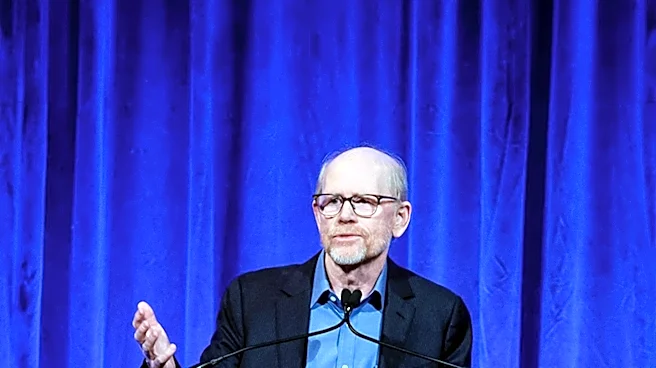
Ron Howard was the initial choice to direct the 1984 film 'Footloose,' according to producer Craig Zadan. Howard, who had already made his feature-length directorial debut in 1977, had read the script for the Kevin Bacon breakthrough role and found it enjoyable.
However, he expressed a lack of confidence in his ability to effectively shoot the musical numbers, leading him to decline the offer. This decision came at a time when Howard was beginning to establish his career behind the camera, following films like 'Splash,' which he directed after many studios had initially rejected the concept. His subsequent directorial successes included 'Cocoon,' an Academy Award-winning effort, 'Willow,' a big-budget blockbuster, and 'Parenthood,' a passion project, solidifying his transition from actor to director by the end of the 1980s. The role of director for 'Footloose' eventually went to Herbert Ross after Michael Cimino was fired due to unreasonable demands.
Why It's Important?
This anecdote highlights a pivotal moment in Ron Howard's early directorial career, showcasing his selective approach to projects and his self-awareness regarding his strengths and weaknesses as a filmmaker. His decision to pass on 'Footloose,' a film that became a significant pop culture staple and box office success, underscores the calculated risks and choices that shape a director's trajectory in Hollywood. While 'Footloose' achieved commercial and critical acclaim, Howard's subsequent films like 'Cocoon' and 'Willow' cemented his reputation for handling diverse genres and larger productions. This period was crucial for Howard in defining his directorial identity, moving beyond his acting roots. It also illustrates the dynamic nature of film production, where initial choices for key roles like director can shift, leading to different creative outcomes and career paths for those involved.
What's Next?
While Ron Howard has not directed a musical film since, his career has continued to evolve, encompassing a wide range of genres from historical dramas to sci-fi epics and documentaries. His current and future projects are likely to continue this diverse trend, focusing on storytelling that aligns with his established directorial strengths. The experience of declining 'Footloose' due to musical numbers may have influenced his subsequent project selections, leading him to focus on narratives where his visual storytelling capabilities were more aligned with the subject matter. This historical decision serves as a point of reflection on the paths not taken in a director's career and how such choices can inadvertently shape their legacy and the types of films they become known for.
Beyond the Headlines
The story of Ron Howard declining 'Footloose' offers a deeper insight into the creative process and the pressures faced by filmmakers in Hollywood. It reveals that even established talents like Howard can experience self-doubt regarding specific technical or artistic challenges, such as choreographing musical sequences. This decision, made early in his directorial journey, underscores the importance of artistic integrity and self-assessment in a career often driven by commercial success. It also subtly highlights the evolution of a director's craft; Howard later acknowledged that he might be more adept at tackling such a challenge now, suggesting a continuous learning and growth mindset within the industry. This narrative contributes to the broader understanding of how a director's personal artistic boundaries and evolving skills influence their body of work and the cultural landscape of cinema.