


What's Happening?
Isack Hadjar, a 22-year-old French driver for Red Bull, expressed significant frustration with his team following the United States Grand Prix in Austin. Despite qualifying third, Hadjar experienced a poor start and encountered multiple technical problems
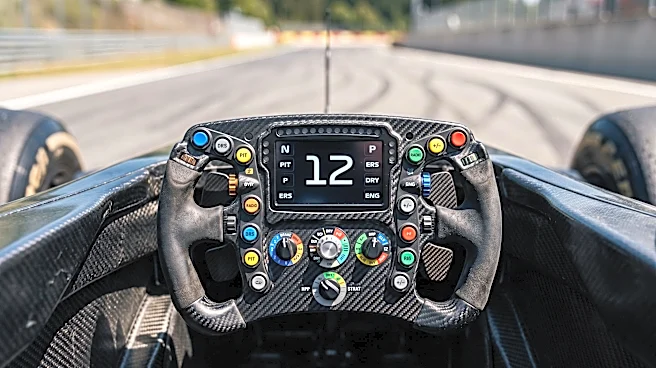
during the race, ultimately finishing sixth. His complaints, aired over team radio, included issues with the clutch, which he described as 'too fragile' and not coping well with temperatures, leading him to demand a redesign. Additionally, Hadjar reported poor radio coverage, making communication with his engineers difficult and resulting in him leaving the pits with the wrong engine map. These issues, he stated, were beyond his control and contributed to his dissatisfaction with the race outcome. Former F1 driver Ralf Schumacher criticized Hadjar's public outburst, suggesting it was unprofessional.
Why It's Important?
Hadjar's public criticism of Red Bull's technical reliability, particularly concerning the clutch and radio systems, highlights potential underlying engineering challenges within a top-tier Formula 1 team. Such issues can impact team morale and public perception, especially when voiced by a driver. For Red Bull, these technical glitches, if persistent, could affect their competitive edge in future races and potentially influence driver retention or recruitment. The incident also underscores the intense pressure on drivers to perform, where technical failures can lead to significant frustration and public displays of discontent. The comments from Ralf Schumacher indicate a broader discussion within the F1 community about appropriate conduct for drivers when facing technical difficulties, especially given the high stakes of the sport.
What's Next?
Red Bull will likely need to address the technical issues raised by Hadjar, particularly the clutch design and radio communication, to prevent similar problems in upcoming races. The team's response to Hadjar's public criticism will also be closely watched, as it could set a precedent for how driver frustrations are managed internally. Hadjar himself will need to manage his public statements more carefully, as suggested by Ralf Schumacher, to maintain a professional image. The focus will now shift to the Mexico City Grand Prix, where Hadjar hopes for a stronger performance, indicating that the team will be under pressure to deliver reliable equipment and improved operational support to avoid further public grievances.
Beyond the Headlines
This incident touches upon the delicate balance between a driver's right to voice concerns about equipment and the team's need to maintain a unified front. In the high-pressure environment of Formula 1, technical reliability is paramount, and any perceived weakness can be exploited by competitors. The public nature of Hadjar's complaints, amplified by team radio broadcasts, brings to light the transparency of modern sports and the challenges teams face in managing their public image. It also raises questions about the internal communication channels within Red Bull and whether drivers feel adequately heard before resorting to public criticism. The long-term implications could include a re-evaluation of technical development priorities and driver communication protocols within the team.