



What's Happening?
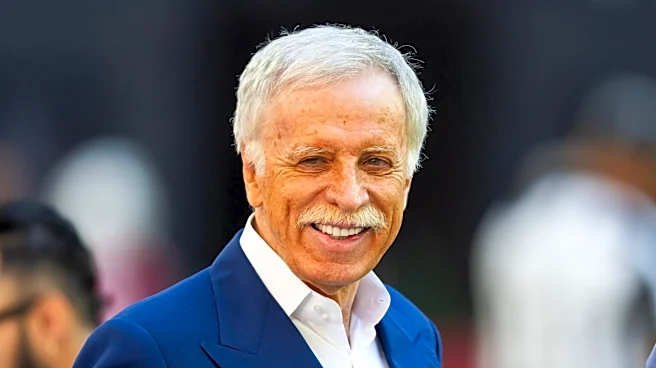
Jerry Reinsdorf, owner of the Chicago Bulls and Chicago White Sox, has been identified as the number one 'cheap' owner in professional sports, according to a ranking by Bodog, reviewed and distributed by Stacker. This designation stems from his consistent
cost-cutting measures across both franchises, despite their significant valuations. The Chicago Bulls are valued at $6 billion, making them the sixth-highest in the NBA, yet Reinsdorf has paid the NBA luxury tax only once, in the 2012-13 season. Similarly, the Chicago White Sox, with a 2023 payroll of $181 million, saw that figure slashed to between $74 million and $80 million by 2025, placing them among the four lowest payrolls in Major League Baseball for a franchise valued at $2 billion. This strategy has not led to championship wins for the Bulls since the Jordan era ended in 1998, nor has it significantly improved the White Sox's performance, leading to fan frustration.
Why It's Important?
This ranking highlights a significant trend in professional sports ownership where financial profitability often takes precedence over on-field success, particularly in large markets. Reinsdorf's approach with both the Bulls and White Sox demonstrates that franchise values can continue to climb even when teams are underperforming and fan bases are dissatisfied. This phenomenon is driven by factors such as national media deals, revenue sharing, and the scarcity of professional sports franchises, which ensure appreciation in value regardless of team performance. The disparity between a franchise's potential spending capacity and an owner's actual investment in player payroll or team infrastructure raises questions about the competitive integrity of leagues and the commitment of owners to their fan bases. For fans, this means a potential trade-off between a team's financial health and its ability to contend for championships, leading to frustration and disengagement. The 'cheap owner' strategy, while profitable for owners, can erode fan loyalty and the overall quality of the sports product.
What's Next?
The continued profitability of sports franchises, even with cost-cutting ownership, suggests that this trend is likely to persist. Owners like Reinsdorf may continue to prioritize financial returns over aggressive spending on player talent, especially given the structural advantages provided by league-wide revenue sharing and increasing media rights deals. This could lead to ongoing fan discontent and potential calls for greater accountability from league offices regarding owner investment in team performance. While some leagues, like the NBA and NFL, have salary caps, MLB's lack of a salary floor allows owners to operate with significantly lower payrolls, exacerbating the issue. Future developments might include increased pressure from player unions for higher minimum spending requirements or changes in revenue-sharing models to incentivize competitive spending. However, as long as franchise values continue to appreciate, the financial incentive for owners to maximize profits through cost control will remain strong, potentially leading to a widening gap between fan expectations and ownership strategies.
Beyond the Headlines
The 'cheap owner' phenomenon extends beyond mere financial decisions; it touches upon the fundamental social contract between sports franchises and their communities. In cities like Chicago, where sports teams are deeply embedded in the cultural fabric, an owner's perceived unwillingness to invest in a competitive product can be seen as a betrayal of public trust and civic pride. This dynamic can lead to a decline in fan engagement, not just in terms of attendance but also in the broader emotional investment that fuels the sports ecosystem. The profitability of these franchises, despite on-field struggles, also highlights the unique economic model of professional sports, where scarcity and collective bargaining agreements often insulate owners from the direct consequences of poor performance. This raises ethical questions about the responsibilities of ownership, particularly when public funds or tax breaks are involved in stadium development or team operations. The long-term implications could include a shift in fan priorities, with a greater emphasis on ownership accountability and a demand for more transparent financial practices within professional sports.