




What's Happening?
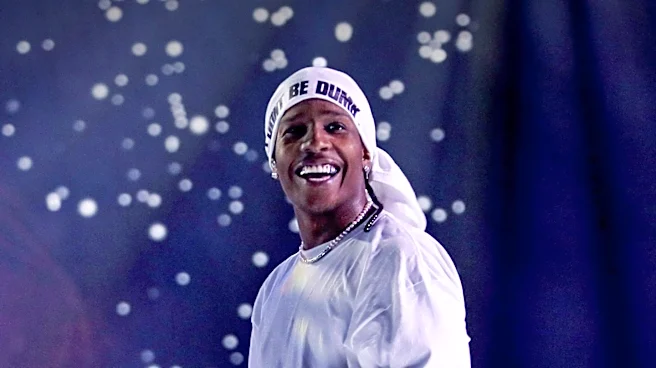
A$AP Rocky, a prominent Harlem MC, has shared his perspective on the current state and future of hip-hop, indicating he feels 'somewhat responsible' for its direction. In an interview with Complex, Rocky explained that his connection to artist Playboi
Carti, whom he describes as the 'godfather of the new contemporary rage-vamp music' and still signed to his AWGE label, links him directly to emerging trends in the genre. He believes that if hip-hop is moving towards this new sound, then he inherently bears some responsibility for its evolution. Despite not always personally connecting with every new style, Rocky expressed an embraceful attitude towards these developments, emphasizing the importance of understanding and accepting where the genre is headed. He also highlighted his appreciation for the diversity in hip-hop, noting that if current artists don't meet specific preferences, listeners can always revisit past catalogs.
Why It's Important?
A$AP Rocky's commentary is significant because it comes from an influential figure within the hip-hop community, offering a unique perspective on the genre's ongoing evolution. His acknowledgment of responsibility for new subgenres, particularly through his association with Playboi Carti, underscores the impact established artists and their labels have on shaping future sounds and trends. This perspective can influence how both established and emerging artists view their roles in the genre's development. Furthermore, Rocky's embrace of diverse styles, even those he doesn't personally 'get,' promotes an open-minded approach within the hip-hop community, potentially fostering greater acceptance of experimental sounds and new artists. This stance could encourage fans to explore beyond their comfort zones, contributing to a more dynamic and inclusive musical landscape.
What's Next?
A$AP Rocky's continued influence is likely to manifest through his ongoing artistic endeavors and his role within AWGE. His 'Don’t Be Dumb World Tour,' which includes upcoming Australian dates, provides a platform for him to showcase his current artistic vision and potentially introduce audiences to new sounds or artists he champions. His public embrace of emerging artists like Laila! and Teezo Touchdown suggests he will continue to highlight talent that he believes is 'pushing the bar,' potentially giving these artists increased visibility. As hip-hop continues to evolve, Rocky's willingness to engage with and even claim partial responsibility for its new directions could solidify his position as a thought leader, influencing discussions about authenticity, innovation, and the genre's future trajectory among artists, critics, and fans alike.
Beyond the Headlines
Beyond the immediate discussion of hip-hop's sound, Rocky's comments touch upon broader themes of artistic legacy and mentorship within the music industry. His statement about 'birthing' an artist like Playboi Carti and feeling responsible for the subsequent musical movement highlights the profound impact mentors and labels can have on shaping cultural landscapes. This dynamic raises questions about the ethical responsibilities of established figures in guiding new talent and the extent to which they should influence artistic direction versus allowing organic evolution. It also underscores the cyclical nature of influence in music, where today's innovators often draw from and then redefine the work of their predecessors. Rocky's perspective encourages a deeper look into how artistic lineage contributes to the continuous reinvention of genres, ensuring their relevance and vitality across generations.