
What's Happening?
Federal Bureau of Investigation (FBI) agents are examining Cenly Chen, former chief growth officer of Super Micro Computer and wife of Nvidia senior adviser Jay Puri, as part of a federal inquiry into
the alleged smuggling of restricted artificial intelligence servers to China. According to The Wall Street Journal, investigators have questioned individuals linked to Super Micro and requested information concerning senior leaders, including Chen, though she has not been charged with any offense. This scrutiny arises from an ongoing U.S. Department of Justice export-control prosecution initiated in March against a Super Micro co-founder, a sales manager, and an external broker. These individuals are accused of conspiring to divert at least US$510 million worth of American-assembled Super Micro servers, containing Nvidia AI chips, to China through a Southeast Asian intermediary. Chen, who left Super Micro earlier this year to become CEO of ChronoScale, married Puri in March 2026. Puri, a longtime Nvidia executive, transitioned to an advisory role in June of this year.
Why It's Important?
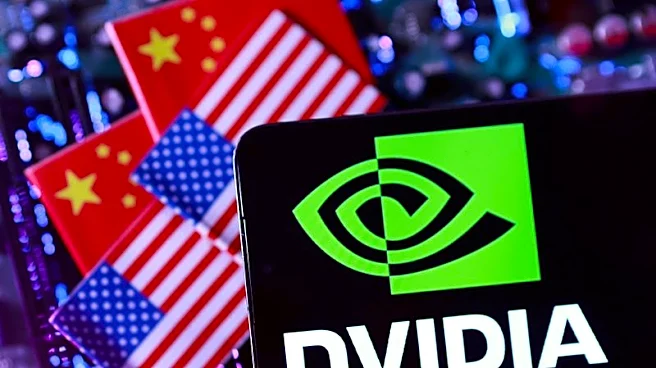
This investigation highlights the U.S. government's intensified efforts to enforce export controls on advanced technology, particularly AI chips, to China. The alleged diversion of high-value AI servers underscores the strategic importance of these components in global technological competition and national security. Super Micro was a significant Nvidia customer, accounting for approximately 9% of the chipmaker's revenue, making any illicit activities involving their products a substantial concern for both companies and U.S. trade policy. The involvement of individuals with close ties to major tech firms like Nvidia and Super Micro could lead to broader implications for corporate governance and compliance within the technology sector. The case also emphasizes the challenges U.S. authorities face in preventing the unauthorized transfer of sensitive technology, especially when complex international networks are involved.
What's Next?
The federal inquiry is ongoing, and investigators are continuing to gather information and question individuals. While Cenly Chen has not been charged, the examination of her role and connections suggests that the investigation could expand further within Super Micro and potentially impact other individuals or entities. The outcome of the U.S. Department of Justice's export-control prosecution against the Super Micro co-founder, sales manager, and external broker will likely set precedents for future enforcement actions. Companies in the technology sector, particularly those dealing with advanced AI components, may face increased scrutiny and pressure to strengthen their export control compliance measures. The situation could also prompt further discussions and policy adjustments regarding the export of critical technologies to geopolitical rivals.
Beyond the Headlines
The scrutiny surrounding Cenly Chen and Jay Puri's relationship, particularly allegations that Chen leveraged her connection with Puri professionally, raises ethical questions about potential conflicts of interest and the boundaries between personal and professional relationships in high-stakes industries. While Chen denies exploiting personal connections for commercial advantage, the allegations highlight the importance of robust internal policies and transparency within corporations to prevent such perceptions. This case also underscores the broader geopolitical tension between the U.S. and China over technological dominance, with AI chips being a critical battleground. The U.S. government's aggressive stance on export controls reflects a strategic effort to curb China's technological advancement, which could have long-term implications for global supply chains, international trade relations, and the future of AI development.