






What's Happening?
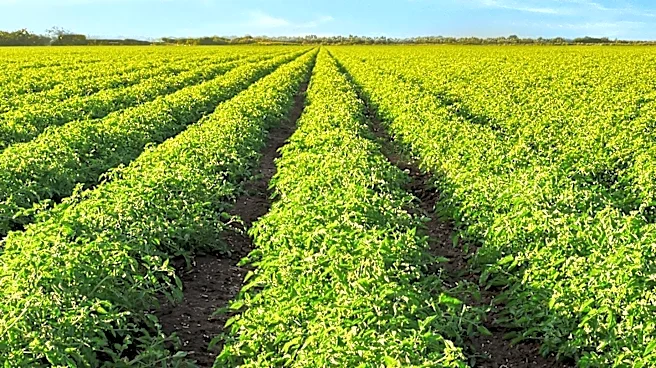
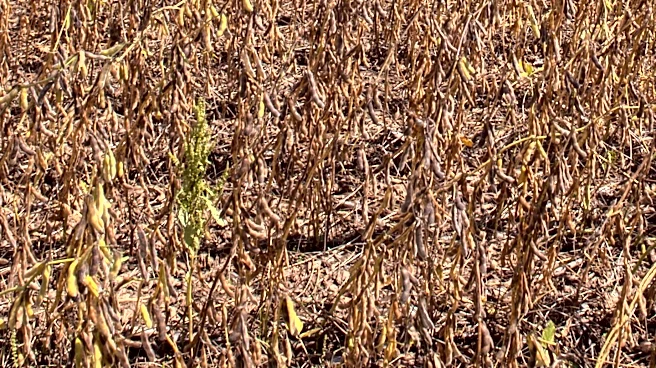
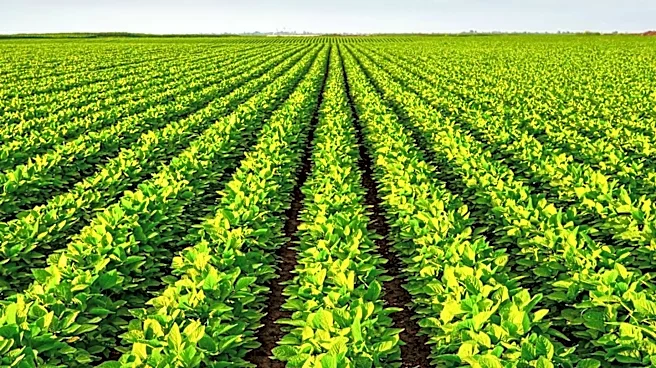
Soybean futures have experienced a decline, with prices dropping 18 ¾ to 40 ½ cents across the board on Monday. This decrease is attributed to weaker product demand and an improving weather forecast. The National Agricultural Statistics Service (NASS)
reported that 80% of the U.S. soybean crop is blooming, with 47% setting pods, both ahead of the five-year average. However, condition ratings have dropped, reflecting some concerns over crop quality. Export inspections showed a slight increase in shipments, but overall exports remain below last year's levels.
Why It's Important?
The decline in soybean prices reflects broader market trends and the impact of weather conditions on agricultural commodities. As weather forecasts improve, expectations for a better harvest increase, potentially leading to lower prices. This situation affects farmers' revenue and could influence planting decisions for the next season. Additionally, the drop in export levels compared to last year highlights challenges in international trade, which could impact the U.S. agricultural sector's competitiveness. These dynamics are crucial for stakeholders in the agricultural supply chain, from producers to exporters.
What's Next?
The market will continue to monitor weather patterns and their impact on crop conditions. Any significant changes could influence future price movements. Additionally, international trade developments, such as China's auction of imported soybeans, could affect global supply and demand dynamics. Stakeholders will also be watching for updates on export levels and any government interventions that might support the agricultural sector. As the season progresses, the focus will be on yield outcomes and their implications for the market.