







What's Happening?
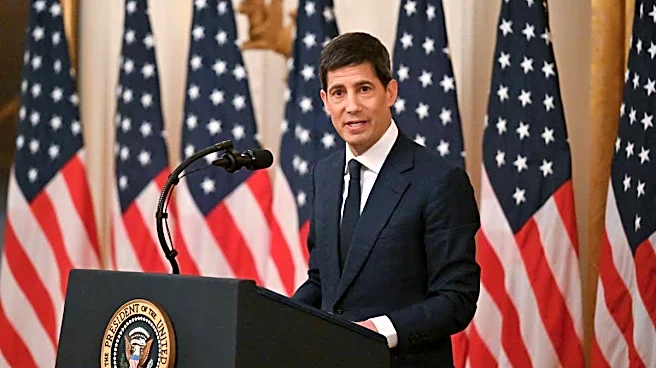
The US Federal Reserve and the Bank of England are anticipated to keep their interest rates unchanged this week, following a peace agreement in the Middle East that is expected to alleviate inflationary pressures. The Federal Reserve, under the new chair
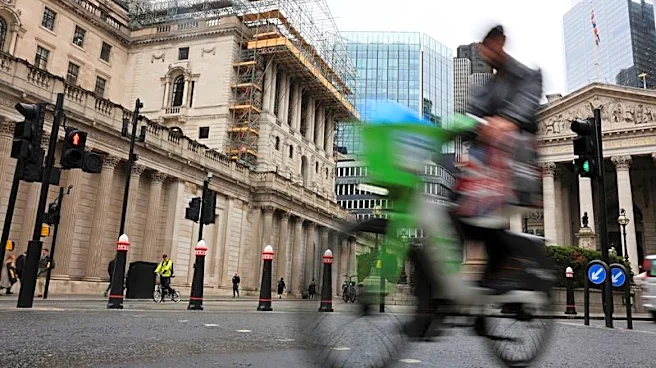
Kevin Warsh, is likely to maintain its benchmark interest rate between 3.5% and 3.75%. This decision comes as US inflation has surged to 4.2% in May, a three-year high. The peace deal, which involves the reopening of the Strait of Hormuz, is expected to ease inflation throughout the year. Similarly, the Bank of England is expected to hold its interest rate at 3.75%, despite UK inflation being at 2.8%, above its target of 2%. Analysts suggest that the Bank's monetary policy committee will adopt a 'wait-and-see' approach, with financial markets still anticipating a potential rate increase in December.
Why It's Important?
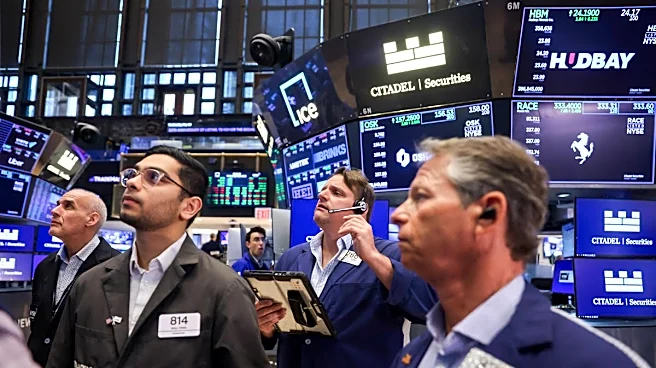
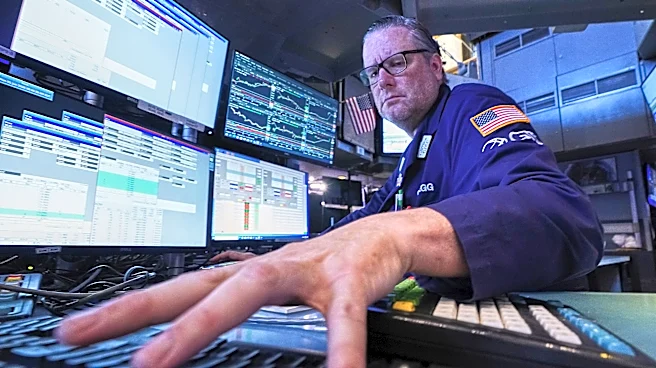
The decision to maintain interest rates is significant as it reflects the central banks' strategies to manage inflation without stifling economic growth. The peace deal with Iran, which has led to a drop in oil prices, is a critical factor in this decision, as it is expected to reduce inflationary pressures. For the US, this move aligns with President Trump's economic policies, potentially stabilizing the economy and avoiding further rate hikes. In the UK, holding rates steady could prevent additional financial strain on consumers and businesses, especially if the peace deal holds and oil prices remain low. The European Central Bank's recent rate increase highlights the varied responses to inflation across regions, emphasizing the global interconnectedness of economic policies.
What's Next?
The Federal Reserve and the Bank of England will closely monitor the situation in the Middle East and its impact on global oil prices and inflation. Should the peace deal endure, it could lead to sustained lower inflation rates, reducing the need for immediate rate hikes. However, if geopolitical tensions resurface, central banks may need to reassess their strategies. Investors and economists will be watching for any signs of wage increases or other inflationary pressures that could prompt a change in policy. The upcoming meetings of the monetary policy committees will be crucial in determining the future direction of interest rates.