





What's Happening?
The Conference of State Bank Supervisors (CSBS) has announced the formation of a new Nonbank Industry Advisory Council. This council is designed to foster dialogue between industry experts and state supervisors regarding the nonbank sector. Its primary
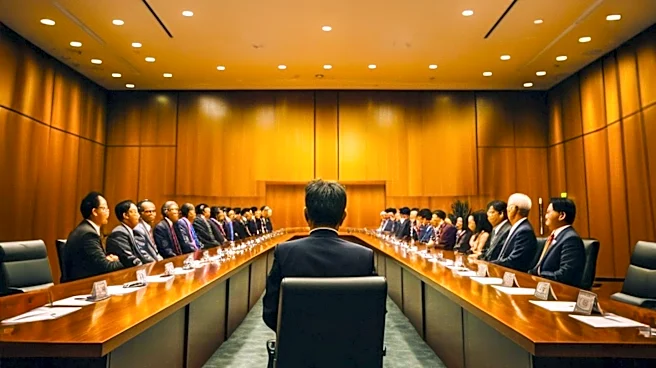
focus will be on discussing the Nationwide Multistate Licensing System (NMLS), its supervisory component, the State Examination System, and the broader state system of nonbank supervision. The council aims to provide a platform for state supervisors to consult with the industry on significant policy or system development issues that would benefit from industry input. The inaugural council will be led by two co-chairs, one representing the industry and the other serving as a regulator liaison, each for a two-year term. It will comprise 30 industry representatives from various sectors including mortgage, money services, consumer finance, and debt collection, along with up to five members from industry-representing organizations. Additionally, CSBS will appoint up to seven state regulators in consultation with relevant state associations. Orrick partner Jedd Bellman has been appointed as an observer to this newly formed council.
Why It's Important?
The establishment of the Nonbank Industry Advisory Council signifies a concerted effort to enhance collaboration and informed oversight within the rapidly evolving nonbank financial sector. This initiative is crucial for maintaining consumer protection and ensuring the safety and soundness of financial markets, particularly as nonbank financial services continue to grow in prominence. By bringing together industry leaders and state regulators, the council can address complex regulatory challenges and develop more effective policies. The inclusion of industry representatives from diverse segments like mortgage, money services, and consumer finance ensures that a wide range of perspectives are considered in policy discussions. This collaborative approach can lead to more practical and effective regulatory frameworks, potentially reducing compliance burdens for businesses while strengthening safeguards for consumers. The participation of an Orrick partner as an observer also highlights the legal community's engagement in shaping the future of nonbank financial regulation.
What's Next?
The newly formed Nonbank Industry Advisory Council will commence its work, with its co-chairs serving two-year terms. The council is expected to hold regular meetings to discuss key issues related to the NMLS, the State Examination System, and broader nonbank supervision. Its ongoing deliberations will likely inform future policy and system development initiatives by CSBS and state supervisors. Industry representatives and regulators will engage in continuous dialogue to identify areas for improvement and innovation in the nonbank sector. The insights and recommendations generated by the council are anticipated to influence regulatory adjustments and potentially lead to new guidelines or best practices. Stakeholders, including nonbank financial institutions and consumer advocacy groups, will closely monitor the council's activities for potential impacts on their operations and interests. The council's work is expected to contribute to a more harmonized and efficient regulatory environment for nonbank financial services across the U.S.
Beyond the Headlines
The creation of this advisory council reflects a broader trend towards increased regulatory scrutiny and a desire for greater transparency in the nonbank financial sector. As nonbank entities play an increasingly significant role in the U.S. financial landscape, their regulation becomes critical for systemic stability. The council's focus on collaboration between industry and regulators could set a precedent for how emerging financial technologies and services are integrated into existing regulatory frameworks. This proactive engagement aims to prevent regulatory gaps and ensure that innovation does not outpace consumer protection. The discussions within the council may also shed light on the evolving definition of 'banking' and the challenges of applying traditional regulatory concepts to modern financial services. Ultimately, the success of this initiative could influence the competitive dynamics between traditional banks and nonbank financial institutions, shaping the future structure of the U.S. financial system.