










What's Happening?
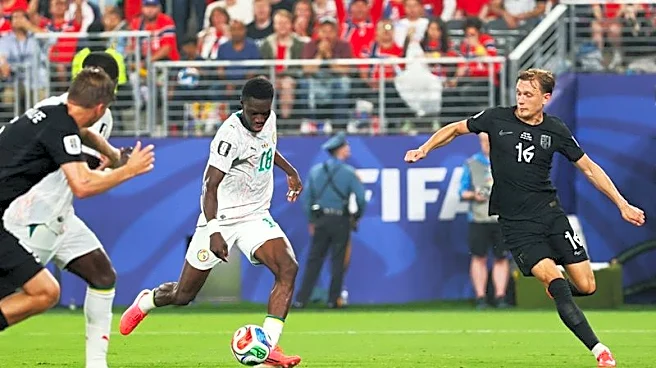
Iliman Ndiaye, an Everton forward, made history during Senegal's 5-0 victory over Iraq in Toronto. Ndiaye, who was introduced in the second half, became the first player in World Cup history to score a goal, provide an assist, register five touches in the opposition
box, and complete five dribbles in a single match after coming off the bench. This performance contributed to Senegal's record-breaking win, marking the first time an African nation scored five goals in a World Cup fixture and achieving the largest winning margin by an African side in the competition's history. Alongside Ndiaye, Ismaila Sarr and Pape Gueye also shone, each scoring and assisting, a feat last seen in Germany's 7-1 victory over Brazil in 2014. Sarr further distinguished himself by becoming Senegal's all-time leading World Cup scorer with four goals.
Why It's Important?
Senegal's emphatic victory over Iraq not only sets a new benchmark for African teams in the World Cup but also significantly boosts their chances of advancing to the knockout stages. The team's superior goal difference now serves as a crucial advantage in the race for qualification. Ndiaye's record-breaking performance highlights the depth and talent within the Senegalese squad, potentially increasing their visibility and influence in international football. This victory also underscores the growing competitiveness of African teams on the world stage, challenging traditional powerhouses and contributing to a more diverse and unpredictable tournament landscape.
What's Next?
Senegal's next steps involve capitalizing on their current momentum to secure a place in the knockout rounds. The team's performance has set high expectations, and they will need to maintain their form in upcoming matches. The victory may prompt strategic adjustments from other teams facing Senegal, as they prepare to counter the dynamic play exhibited by Ndiaye and his teammates. Additionally, the success could lead to increased interest and investment in Senegalese football, both domestically and internationally, as stakeholders recognize the potential for further achievements.