



What's Happening?
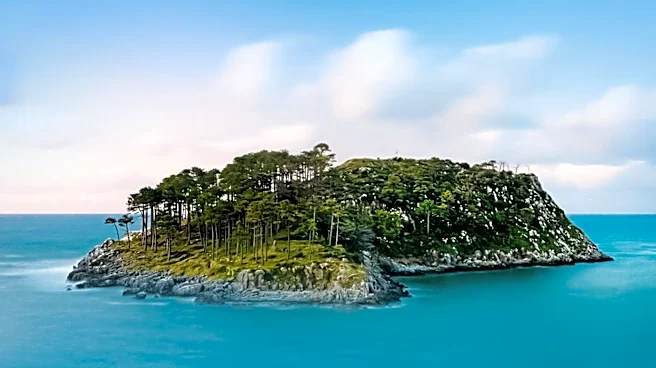
William F. Baker, an 84-year-old U.S. broadcaster known for helping launch Oprah Winfrey's talk show career, and his wife, Jeannemarie Gelin-Baker, are considering selling Henry Island, their nearly 90-hectare private island off the coast of Cape Breton,
Nova Scotia. The couple purchased the island in 1991 as a retreat from their busy lives in New York City. Henry Island features a four-bedroom family home and a fully functioning lighthouse, originally installed in 1901. The Bakers have spent 35 years renovating the property, making the home fully off-grid with rainwater collection and solar panels. The island has been on the market for two years, listed for nearly $7 million Cdn, and has attracted interest from buyers in Ontario, the U.S., and Germany. The Bakers are seeking a buyer who will preserve the island's natural state.
Why It's Important?
The potential sale of Henry Island highlights a growing trend in the real estate market for private islands, particularly those offering seclusion and natural beauty. For U.S. buyers, such properties represent unique investment opportunities and a chance to own a remote, self-sufficient retreat away from urban pressures. The Bakers' desire to find a buyer committed to preservation also underscores a broader environmental consciousness among property owners of significant natural assets. This sale could set a precedent for how private, ecologically sensitive islands are valued and transferred, influencing future transactions in the luxury real estate market. The involvement of a prominent U.S. figure like William F. Baker also draws attention to the appeal of Canadian coastal properties for high-net-worth individuals seeking privacy and a connection to nature.
What's Next?
The Bakers' agent, Angie Bryant with Sotheby's International Realty Canada, will continue to market Henry Island through their website and in magazines dedicated to lighthouse preservation. The goal is to attract a buyer who shares the Bakers' vision of maintaining the island's untouched character. While the couple is reluctant to part with the island, their age and their children's inability to maintain the property necessitate the sale. The ongoing marketing efforts will likely target individuals or groups with a strong interest in conservation and a substantial financial capacity. The sale process will involve careful vetting of potential buyers to ensure the island's future aligns with the Bakers' preservation goals, potentially influencing the terms and conditions of the final sale.
Beyond the Headlines
The story of Henry Island touches upon themes of legacy, environmental stewardship, and the evolving concept of luxury. For the Bakers, the island is more than just property; it represents a significant part of their lives, a place of peace and a testament to their dedication to preservation. Their decision to sell, driven by practical considerations, raises questions about the long-term sustainability of private ownership of natural heritage sites. The emphasis on finding a buyer who will keep the island 'as untouched as possible' reflects a growing societal value placed on ecological integrity over purely commercial development. This narrative could inspire other private island owners to consider similar stewardship in their sales, potentially fostering a new standard for responsible land transfer in unique natural environments.