



What's Happening?
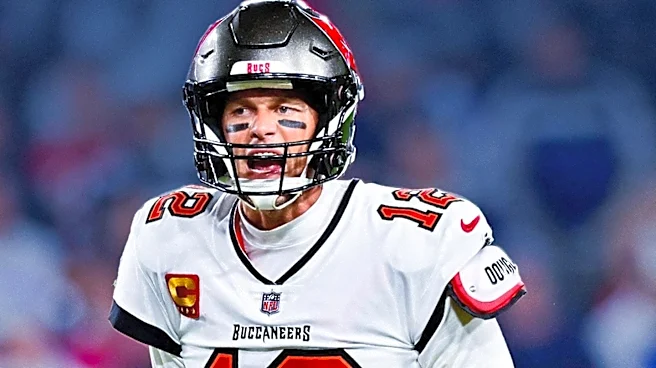
NFL legend and FOX color commentator Tom Brady received a call from the Federal Communications Commission (FCC) after making several 'colorful comments' during a recent Washington Commanders vs. Dallas Cowboys game. During the broadcast, Brady reportedly
exclaimed 'Oh s***' when Commanders quarterback Jayden Daniels sustained an elbow injury and later described a pass from Dallas quarterback Dak Prescott to CeeDee Lamb as an 'absolute piss missile.' The FCC, which regulates television broadcast communications, restricts obscene, indecent, and profane material. Brady acknowledged the call in an Instagram post, humorously adding, 'More miss pissles and a few provolones with cheese no doubt coming up this year… yes, I meant miss pissles, I got a call from the FCC.' While Brady's tone suggests no serious repercussions, the incident highlights the FCC's oversight of live broadcast content.
Why It's Important?
This incident underscores the regulatory environment surrounding live television broadcasts in the U.S., particularly concerning language deemed obscene, indecent, or profane by the FCC. For broadcasters and commentators, especially those new to the role like Tom Brady, it serves as a reminder of the strict guidelines that govern on-air speech, even in sports commentary where passionate exclamations might be common. The FCC's intervention, even if informal, indicates that public figures transitioning into media roles must adapt to a different set of communication standards than those in their previous professions. This could influence how networks train and monitor their talent, potentially leading to more cautious language use to avoid penalties or public scrutiny. The situation also highlights the ongoing tension between live, unscripted commentary and broadcast regulations, impacting both content creators and the viewing public.
What's Next?
Following the FCC's call, Tom Brady will likely be more mindful of his language during future broadcasts. While the initial call appears to have been a warning rather than a punitive action, continued use of prohibited language could lead to more formal FCC investigations or penalties for the broadcasting network. FOX, as the network airing the games, may reinforce its internal guidelines for commentators to ensure compliance with FCC regulations. This event could also prompt broader discussions within sports broadcasting about the balance between authentic, engaging commentary and adherence to broadcast standards. Other sports commentators and networks might review their own practices to prevent similar incidents, potentially leading to a more conservative approach to on-air language in live sports events.
Beyond the Headlines
The FCC's intervention in Tom Brady's commentary touches upon broader themes of freedom of speech versus public decency standards in media. While the First Amendment protects free speech, broadcast media operates under specific regulations due to its public nature and accessibility to all ages. This incident highlights the challenge of maintaining spontaneity and authenticity in live commentary while adhering to these standards. It also reflects the evolving landscape of public figures transitioning into media roles, where their established personas may clash with the stricter requirements of broadcasting. The 'piss missile' comment, while perhaps a common locker room term, demonstrates the cultural gap between sports environments and mainstream television, prompting a reevaluation of what constitutes acceptable language in a widely accessible public forum.