







What's Happening?
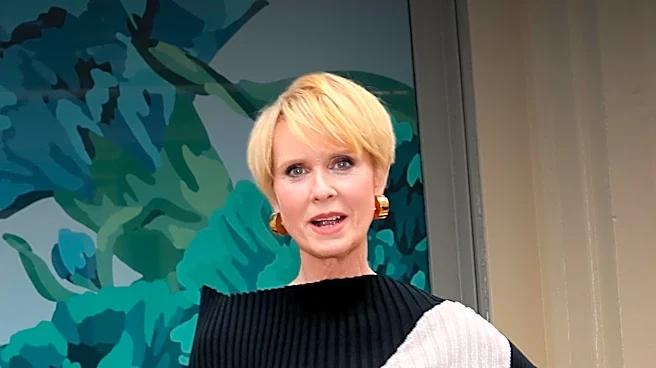
Charles Ezekiel Mozes, the son of actress Cynthia Nixon and her former partner Danny Mozes, has largely maintained a private life despite his mother's public career. Born in New York in December 2002, Charles is the middle child among Nixon's three children.
While his mother gained international recognition for her role as Miranda Hobbes in 'Sex and the City' and has been involved in activism and politics, Charles has chosen a path away from the public spotlight. He rarely appears in media and has not pursued a career in entertainment, unlike many children of celebrities. His early life was spent in New York, and although his mother was working on 'Sex and the City' during her pregnancy with him, he did not become a child actor or regular television personality. Information regarding his education, career, relationships, and personal finances remains largely unconfirmed, reflecting his deliberate choice for privacy.
Why It's Important?
The decision by Charles Ezekiel Mozes to maintain a private life highlights a growing trend among the offspring of public figures who opt out of the celebrity lifestyle. This choice challenges the pervasive nature of celebrity culture, where the lives of famous individuals and their families are often subject to intense public scrutiny. It underscores the potential for individuals born into fame to carve out their own identities and boundaries, prioritizing personal privacy over public recognition or leveraging their family name for career advancement. This approach can influence public perception of celebrity families, potentially fostering a greater respect for personal space and reducing the expectation that every aspect of a public figure's family life should be accessible. It also raises questions about the societal pressure on celebrity children to follow in their parents' footsteps or to embrace a public persona, demonstrating that alternative paths are both possible and desirable for some.
What's Next?
Given Charles Ezekiel Mozes' consistent efforts to remain out of the public eye, it is likely that he will continue to pursue a private life. There are no indications that he plans to enter the entertainment industry or engage in public-facing roles. His mother, Cynthia Nixon, has generally respected her children's privacy, and this trend is expected to continue. Future public appearances, if any, are anticipated to be minimal and primarily in family-related contexts rather than as a means to gain personal fame. The public's interest in his life may persist due to his mother's prominence, but without active participation from Charles, detailed information about his personal and professional endeavors will likely remain scarce. This trajectory suggests a continued emphasis on personal autonomy and a deliberate detachment from the celebrity machine.
Beyond the Headlines
Charles Ezekiel Mozes' choice for privacy offers a compelling case study on the ethics of public interest versus individual rights in the digital age. In an era where social media and constant connectivity often blur the lines between public and private, his deliberate withdrawal from the spotlight serves as a powerful statement. It implicitly critiques the commodification of personal lives, particularly those associated with celebrity. This stance can inspire other individuals, both within and outside celebrity circles, to assert greater control over their personal narratives and resist the pressures of constant public exposure. Furthermore, it highlights the psychological and social benefits of maintaining anonymity, such as freedom from constant judgment, the ability to pursue personal interests without external pressures, and the development of an identity independent of familial fame. His example contributes to a broader conversation about the value of privacy in an increasingly transparent world.