









What's Happening?
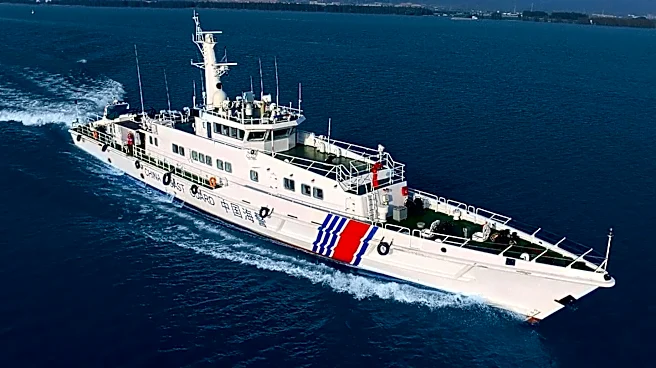
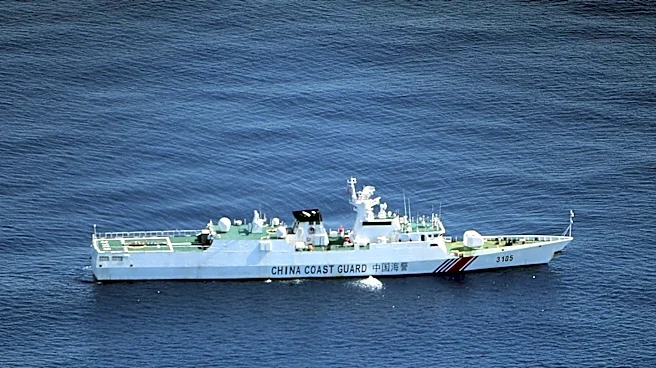
A potential Chinese quarantine of Taiwan, involving selective ship inspections rather than a full military blockade, could significantly disrupt international commerce. This strategy, described as law enforcement by Beijing, aims to pressure Taiwan without
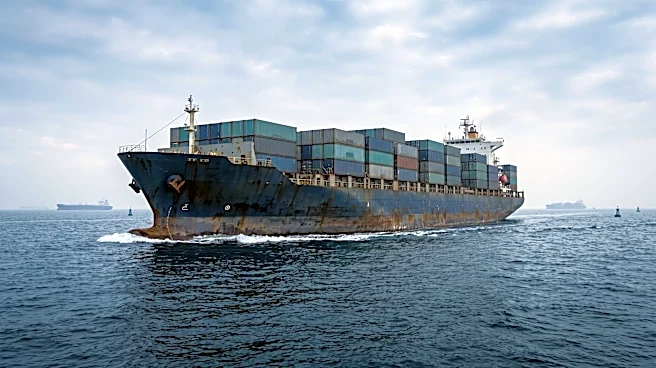
requiring an invasion. The Taiwan Strait is a critical global shipping route, with over $2.4 trillion worth of goods passing through it in 2024, including nearly $1.3 trillion in Chinese imports and exports. Such an operation would force shipping companies to assess risks, potentially leading to increased costs, delays, and altered routes. Insurers would also re-evaluate coverage terms, possibly imposing additional conditions or higher premiums for vessels bound for Taiwan. The commercial implications could begin well before any military confrontation, as companies and banks would need to decide on the viability of continuing trade routes under uncertain conditions.
Why It's Important?
This potential action by China carries significant implications for global trade and the U.S. economy. The Taiwan Strait is a vital artery for international shipping, and any disruption could lead to widespread supply chain issues, affecting industries reliant on goods passing through the region. For the U.S., this could mean higher import costs, delays in receiving critical components, and potential inflationary pressures. While China might aim to target only Taiwan-bound vessels, the broader commercial uncertainty could impact all shipping in the strait, including traffic to and from mainland Chinese ports. This scenario highlights the interconnectedness of global commerce and the potential for geopolitical tensions to translate into tangible economic consequences for businesses and consumers worldwide. The financial sector, particularly banks involved in trade financing, would also face increased risk and complexity.
What's Next?
Should China implement a maritime quarantine, shipping companies would immediately face decisions regarding compliance, insurance validity, and the commercial viability of routes to Taiwan. Insurers would likely adjust their policies and premiums, potentially making trade with Taiwan more expensive or difficult. Foreign governments would need to determine their response to China's enforcement activities, which Beijing might present as routine law enforcement rather than a military action. Taiwan, with international support, would likely challenge China's asserted authority over its maritime trade. The situation could escalate if vessels resist inspection or if other navies intervene. The long-term impact would depend on the duration and intensity of the quarantine, as well as the reactions of international commercial and political stakeholders.
Beyond the Headlines
The proposed 'quarantine' strategy by China represents a nuanced approach to exerting pressure on Taiwan, distinct from a full-scale invasion. By framing it as law enforcement, Beijing aims to test international norms and potentially establish de facto control over the Taiwan Strait without triggering a direct military conflict. This approach raises complex legal questions regarding international maritime law and sovereignty. The economic consequences could extend beyond direct shipping disruptions, impacting global financial systems as banks reassess risks associated with trade financing in the region. The situation also underscores the vulnerability of global supply chains to geopolitical tensions and the potential for economic leverage to be used as a tool of foreign policy, with far-reaching implications for international commerce and stability.