





What's Happening?
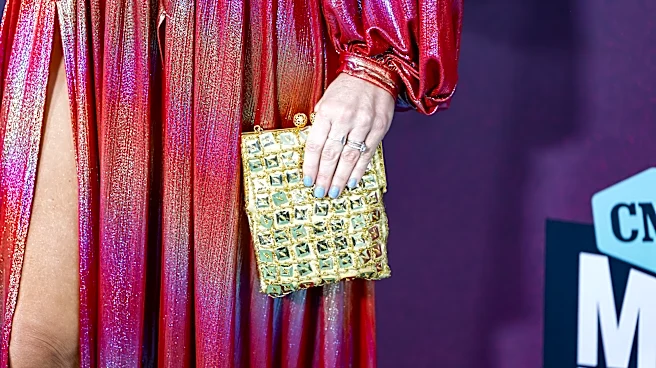
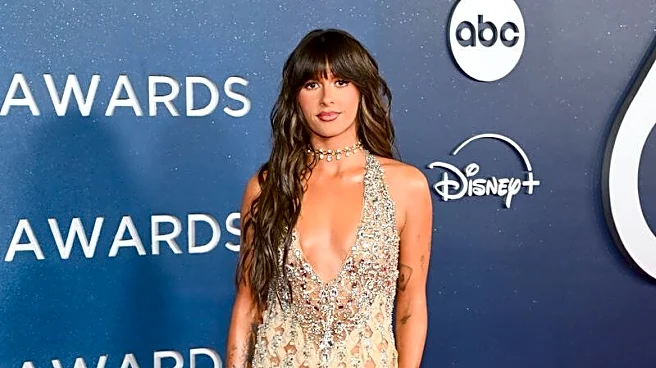
Kristin Cavallari attended the 2026 CMA Awards wearing a gown designed by Mônôt. The dress, characterized by its 'great color' but 'hideous design' according to critics, was part of a broader red carpet event where various celebrities showcased their
fashion choices. The Country Music Awards serve as a significant platform for artists and public figures to display their style, often leading to public commentary and fashion critiques. Cavallari's choice was highlighted among other notable outfits, including those worn by Ella Langley in Elie Saab Couture, Glen Powell in Dzojchen, and Kimberly Schlapman in David Koma, each receiving specific feedback on their aesthetic merits and flaws. The event itself is a major annual gathering for the country music industry, celebrating achievements and providing a high-profile stage for attendees.
Why It's Important?
The fashion choices at high-profile events like the CMA Awards are important as they reflect current trends, influence public perception of celebrity style, and provide significant exposure for designers. For brands like Mônôt, having a celebrity like Kristin Cavallari wear their design, even if critically reviewed, generates visibility and discussion within the fashion industry and among the general public. These events also contribute to the broader entertainment economy, driving interest in celebrity culture, fashion commentary, and the music industry itself. The critiques, whether positive or negative, shape the narrative around celebrity fashion and can impact a designer's reputation or market appeal. Furthermore, such events offer a glimpse into the evolving landscape of red carpet fashion, where traditional elegance often meets avant-garde or unconventional designs, sparking debate and setting new benchmarks for style.
What's Next?
Following the CMA Awards, fashion critiques and public discussions about celebrity outfits, including Kristin Cavallari's Mônôt gown, are expected to continue across various media platforms. Designers featured at such events often see increased interest in their collections, potentially leading to new collaborations or heightened demand for their creations. Celebrities, in turn, may adjust their future fashion choices based on public and critical reception. The broader fashion industry will likely analyze these red carpet trends to inform upcoming collections and marketing strategies. For the CMA Awards, the fashion spectacle remains a key component of its overall appeal, contributing to its cultural footprint beyond just the musical accolades. Future events will undoubtedly feature new fashion statements, continuing the cycle of anticipation, display, and critique.
Beyond the Headlines
Beyond the immediate fashion commentary, the choice of attire at events like the CMA Awards can reflect deeper cultural shifts and individual expressions. For Kristin Cavallari, her selection of a Mônôt design, despite mixed reviews, underscores the willingness of public figures to take fashion risks and challenge conventional aesthetics. This can spark broader conversations about beauty standards, personal style, and the role of celebrity in influencing taste. The interplay between designers, celebrities, and the media in shaping fashion narratives highlights the commercial and cultural power of these events. It also touches upon the subjective nature of art and design, where what one critic deems 'hideous' another might find 'bold' or 'innovative,' reflecting diverse perspectives within the fashion world and among the public.