





What's Happening?
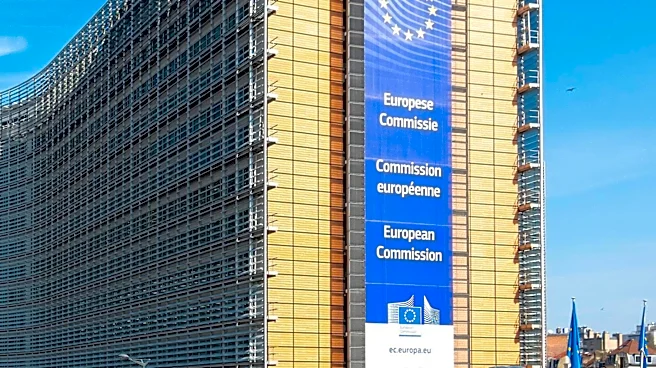
The European Commission has initiated a formal antitrust investigation into Coca-Cola Europacific Partners (CCEP), the primary supplier of soft drinks in eight EU countries. The probe centers on suspicions that CCEP has abused its dominant market position
to prevent supermarkets and other retailers from purchasing products across national borders within the EU. European Commissioner Teresa Ribera, responsible for competition policy, stated that the investigation aims to determine if CCEP has erected barriers between national markets, making it difficult for traders to buy products across borders and secure better terms. The Commission is examining four specific practices: conditioning wholesale discounts on drinks not being exported to other EU countries, offering different packaging formats in various countries to complicate cross-border trade, providing incentives to buyers to limit imports into Spain, and refusing to negotiate cross-border contracts with traders, insisting instead on separate national negotiations. CCEP, headquartered in the United Kingdom, distributes Coca-Cola brands in Belgium, France, Germany, Luxembourg, the Netherlands, Portugal, Spain, and Sweden. The investigation focuses on the wholesale trade of carbonated soft drinks and sports drinks, excluding restaurants, hotels, and cafés.
Why It's Important?
This investigation is significant because it addresses practices that could undermine the integrity of the EU's internal market and restrict competition, potentially leading to higher prices and reduced consumer choice. If CCEP is found to have partitioned the internal market along national borders, it would violate Article 102 of the Treaty on the Functioning of the European Union, which prohibits the abuse of a dominant position. The issue of price discrepancies for identical products across EU member states has been a long-standing concern, with online supermarkets like Picnic in the Netherlands reporting significant price differences for Coca-Cola products compared to neighboring Germany. Such practices can disadvantage consumers in countries with higher prices and hinder the ability of retailers to source products more affordably, thereby limiting competitive pricing. The outcome of this probe could set a precedent for how large multinational corporations operate within the EU's single market, reinforcing the principle that consumers should not pay more for products based solely on their country of residence within the Union.
What's Next?
The European Commission's investigation is now formally underway, and there is no legal deadline for its completion. CCEP has stated its commitment to complying with all applicable laws and regulations and will fully engage with the Commission's inquiries, though it will not comment further at this stage. If the Commission's suspicions are confirmed, CCEP could face substantial fines and be ordered to cease the anti-competitive practices. The opening of this formal proceeding means that national competition authorities are precluded from assessing the same practices under European competition law. The investigation will involve gathering evidence, interviewing stakeholders, and analyzing market data to determine if CCEP's actions constitute an abuse of its dominant position. The findings could lead to significant changes in CCEP's distribution and pricing strategies across the EU, potentially fostering greater cross-border trade and price convergence for soft drinks within the bloc.
Beyond the Headlines
This antitrust probe extends beyond just Coca-Cola Europacific Partners, highlighting broader challenges within the EU's single market regarding parallel trade and price harmonization. The practice of segmenting markets by offering different packaging or refusing cross-border contracts is a common tactic used by some multinational companies to maintain price differentials and control distribution channels. This investigation could encourage other companies operating within the EU to review their own cross-border sales and pricing strategies to ensure compliance with competition laws. Furthermore, it underscores the European Commission's ongoing commitment to enforcing fair competition and protecting consumer interests across member states. The outcome could empower retailers to negotiate better terms and source products more freely across borders, ultimately benefiting consumers through increased choice and potentially lower prices. It also reinforces the EU's role as a strong regulatory body in ensuring a level playing field for businesses and consumers alike.