







What's Happening?
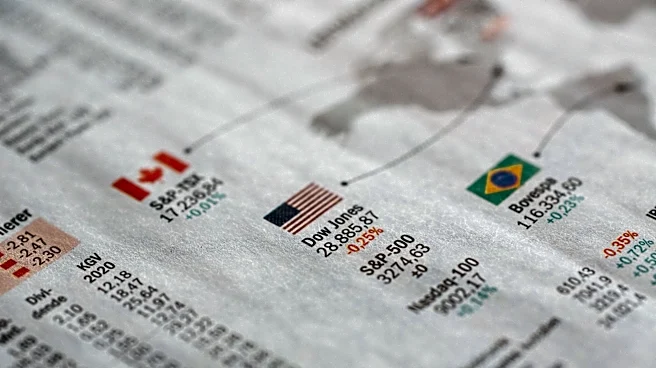
The Dow Jones Industrial Average experienced a rise of 0.3% on June 25, 2026, following the release of key inflation data and a stronger-than-expected GDP reading. This increase was further supported by Micron Technology's robust quarterly earnings report.
In contrast, the S&P 500 and Nasdaq Composite saw declines of 0.1% and 0.4%, respectively. The downturn in these indices was attributed to a significant drop in oil prices and renewed pressure on AI-focused stocks. Oil prices fell to their lowest levels since early March, with Brent crude futures dropping 4% to $73 a barrel and West Texas Intermediate crude futures nearing $70 a barrel. The decline in oil prices coincided with discussions between Iran and Oman about implementing a toll system for ships transiting the Strait of Hormuz, a critical waterway for global trade.
Why It's Important?
The movements in the stock market reflect broader economic trends and investor sentiment. The rise in the Dow Jones suggests confidence in certain sectors, particularly those less reliant on technology stocks, which have been under pressure due to concerns over high valuations and potential interest rate hikes. The decline in oil prices could have significant implications for the energy sector and related industries, potentially affecting global trade dynamics. Additionally, the performance of AI-focused stocks indicates ongoing volatility in the tech sector, which could influence investment strategies and market stability. The discussions about tolls in the Strait of Hormuz highlight geopolitical tensions that could impact global shipping and trade routes.
What's Next?
Investors will be closely monitoring the upcoming earnings report from Micron Technology, as it could provide further insights into the health of the tech sector and the impact of AI developments. The outcome of US-Iran talks and the potential implementation of tolls in the Strait of Hormuz will also be key areas of focus, as they could affect oil prices and global trade. Market participants will likely continue to assess the implications of inflation data and GDP readings on future monetary policy decisions, particularly regarding interest rates.