
What's Happening?
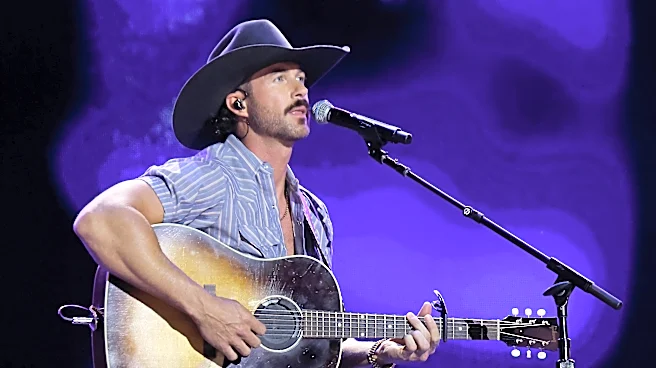
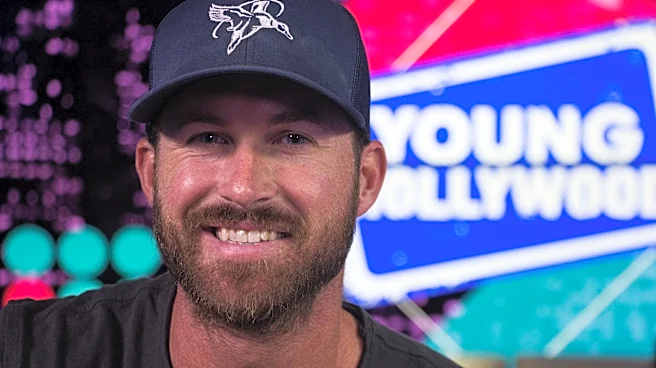
Country music star Riley Green recently disclosed that his original musical aspirations were rooted in rock music, not country. In an interview with 92.5 XTU, Green shared that he initially wanted to be
a 'cool rock guy,' drawing inspiration from artists like Eric Clapton. Despite this early dream, Green never actively pursued a professional music career, instead playing cover songs at local gigs with friends for enjoyment and a bar tab. He worked in construction after college, with music being a casual pastime. It was only when he grew tired of performing the same cover songs that he began writing his own material. These original songs, which naturally reflected his upbringing and experiences, organically steered him towards the country genre. Green noted that he simply wrote about what he knew, leading his music to inherently become country.
Why It's Important?
This revelation offers insight into the organic development of a prominent country music artist's career, highlighting how personal experiences and authenticity can shape an artist's genre and success. For aspiring musicians, Green's journey underscores that a career path in music may not always be linear or pre-planned, emphasizing the value of creating music that genuinely reflects one's background. It also illustrates how an artist's initial influences might differ significantly from their eventual successful genre, suggesting that artistic evolution can be driven by self-discovery rather than strict adherence to early ambitions. This narrative can resonate with fans by providing a more personal understanding of Green's artistic origins and the genuine roots of his country sound.
What's Next?
While Green's career is firmly established in country music, this insight into his past may influence future musical explorations or collaborations. Artists often draw from their diverse influences, and Green's early rock aspirations could subtly inform future songwriting or performance styles, potentially leading to genre-bending elements in his work. For his fanbase, this information could foster a deeper appreciation for his artistic journey and the authenticity of his current sound. It might also spark discussions among music critics and fans about the evolution of artists and the fluidity of genre boundaries, especially as artists continue to experiment with different sounds throughout their careers. There are no immediate indications of a shift in his musical direction, but this background adds a layer of depth to his artistic identity.
Beyond the Headlines
Green's story touches upon broader themes of artistic identity and the often-unpredictable nature of creative careers. It challenges the notion that artists must rigidly adhere to a singular vision from the outset, instead showcasing how genuine expression can lead to unexpected success in a different domain. This narrative also highlights the power of authenticity in songwriting; by writing about his own life and experiences, Green found his true voice and connected with an audience, even if it wasn't the genre he initially envisioned. It suggests that the most impactful art often comes from a place of personal truth, regardless of initial genre aspirations, and that sometimes, the path to success is found by simply creating what feels natural rather than what is planned.