





What's Happening?
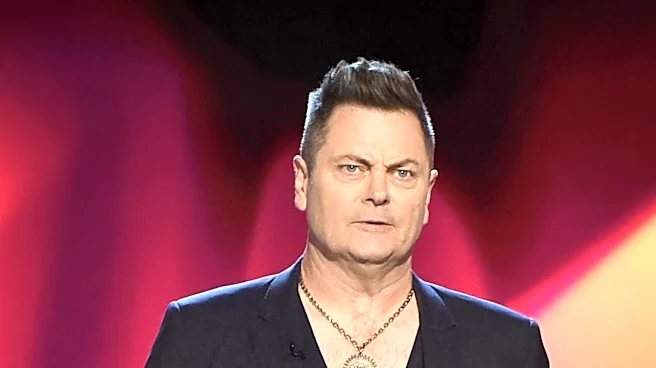
Actor Nick Offerman has publicly responded to conservative commentator Ben Shapiro's critique of his character in the HBO series 'The Last of Us.' Shapiro, in a past commentary, analyzed Offerman's role as Bill in the episode 'Long, Long Time,' which
depicts a gay romance between Bill and Frank. Shapiro described the episode as having 'no zombies, no real threat,' focusing instead on 'two gay dudes who meet and have a relationship.' He further characterized Offerman's character as 'gay Ron Swanson' who 'likes to nail dudes' and commits suicide with his partner. Offerman, during an appearance on 'Talk Easy with Sam Fragoso,' expressed shock and embarrassment regarding Shapiro's analysis, stating that Shapiro 'got eight things wrong in his recap, besides his rampant homophobia.' Offerman, who won an Emmy for the role, noted that he had previously incorporated Shapiro's comments into his stand-up routine, joking that Shapiro 'questioned my masculinity.' He emphasized his pride in performing diverse roles, including those that challenge traditional notions of masculinity.
Why It's Important?
This exchange highlights a broader cultural clash between traditional conservative viewpoints and evolving representations in mainstream media, particularly concerning LGBTQ+ themes. Ben Shapiro's commentary, which frames the episode's focus on a gay relationship as a deviation from the show's 'zombie' premise, reflects a segment of the audience that may resist or feel uncomfortable with such narratives. Nick Offerman's response, however, underscores the artistic intent behind the episode, which was widely praised by critics for its nuanced storytelling and emotional depth. The episode's success, including Offerman's Emmy win, suggests a growing acceptance and appreciation for diverse and inclusive narratives within the entertainment industry. This incident also brings attention to the role of public figures like Shapiro in shaping cultural discourse and the potential for their critiques to be perceived as homophobic or misinformed by those within the creative community and a significant portion of the audience. The debate touches on themes of artistic freedom, representation, and the interpretation of media content in a politically charged environment.
What's Next?
While this specific exchange is a retrospective commentary on past events, it contributes to ongoing discussions about media representation and cultural criticism. The entertainment industry is likely to continue producing diverse content, including stories that explore LGBTQ+ relationships, as evidenced by the critical and popular success of 'The Last of Us' episode. Public figures like Ben Shapiro will likely continue to offer their perspectives on such content, potentially fueling further debate. The response from fans, who 'fiercely mocked Shapiro’s fixation on the episode,' indicates a strong audience base that supports and defends these inclusive narratives. This dynamic suggests a continued tension between creators pushing for more diverse storytelling and critics who may view such content through a more traditional or politically conservative lens. The broader conversation around media literacy and the interpretation of artistic works will also likely persist, with audiences and critics alike engaging in discussions about the underlying messages and societal implications of popular culture.
Beyond the Headlines
This incident delves into the deeper implications of cultural gatekeeping and the evolving definition of 'masculinity' in contemporary society. Ben Shapiro's critique, particularly his focus on Offerman's character 'liking to nail dudes' and his 'gay Ron Swanson' remark, can be seen as an attempt to police gender and sexual norms within popular culture. Offerman's counter-response, emphasizing his ability to 'split wood and change a truck tire' while also performing in a critically acclaimed gay role, challenges the narrow confines of traditional masculinity. It suggests that strength and manliness are not antithetical to emotional depth or diverse sexual identities. The episode itself, by presenting a tender and complex gay love story within a post-apocalyptic setting, subverts expectations and expands the scope of what constitutes a 'heroic' or 'meaningful' narrative. This broader cultural shift, where diverse identities are increasingly portrayed with authenticity and respect, reflects a move towards a more inclusive and representative media landscape, despite resistance from certain ideological corners.