

What's Happening?
For Spring/Summer 2027, designers are increasingly incorporating horror folklore and fantasy themes into their runway collections, moving beyond traditional fairy tales to explore darker, more complex narratives. Chopova Lowena presented deconstructed
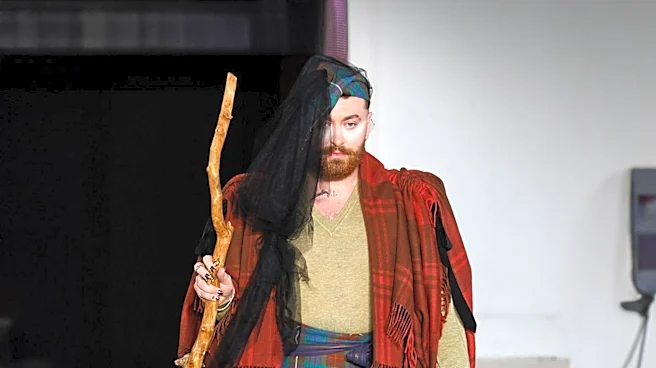
skirts with fuzzy pom-poms and faux fur panels, inspired by figures like the forest witch Baba Yaga and the malevolent swamp fairy Kikimora. Caroline Hú showcased creature-esque models in destroyed lace blazers and patchworked gowns, featuring hand-stitched prose from a somber fairy tale. Pipenco's collection, staged partially outdoors with storm clouds and live fiddlers, drew inspiration from Muma Pădurii, the Romanian mother of the forest, with gravity-defying knitted creations and accessories like wooden stumps. Jean Paul Gaultier's show featured a folkloric spirit with dresses made of bells and red embroidered motifs from heritage Dutch folklore. Zoe Gustavia Anna Whalen's aesthetic, described as witchy and modern Victorian, included doilies and crafty plaid bustles, with show notes emphasizing pieces for a modern world that is 'impossible to romanticize.'
Why It's Important?
This trend is significant for the U.S. fashion industry as it reflects a deeper cultural shift towards embracing complex, often darker, narratives in artistic expression, moving away from purely aspirational or romanticized themes. The incorporation of horror folklore and fantasy allows designers to explore themes of strength, vulnerability, and the human condition in a more nuanced way, resonating with a contemporary audience that may find traditional fairy tales overly simplistic. This shift can influence consumer preferences, encouraging a demand for clothing that tells a story and carries a deeper meaning, rather than just serving as a status symbol. It also opens up new avenues for creativity and innovation in design, pushing boundaries in silhouettes, materials, and presentation. For U.S. designers, this trend offers an opportunity to engage with diverse cultural mythologies and create collections that are both visually striking and intellectually stimulating, potentially setting new directions for fashion aesthetics and storytelling.
What's Next?
The embrace of horror folklore and fantasy themes is likely to continue influencing upcoming collections, potentially leading to more designers exploring mythological figures, ancient traditions, and darker narratives. This trend could also extend beyond the runway into mainstream fashion, with elements of these themes appearing in ready-to-wear collections and accessories. Collaborations between fashion designers and artists specializing in folklore, mythology, or dark fantasy could become more common, enriching the creative process and expanding the reach of these themes. The storytelling aspect of these collections may also lead to more immersive fashion presentations, incorporating elements of performance art, theatrical staging, and digital experiences. Furthermore, this trend might inspire a renewed interest in cultural heritage and traditional crafts, as designers delve into diverse folkloric traditions for inspiration, potentially fostering cross-cultural exchanges and appreciation within the fashion world.
Beyond the Headlines
The adoption of horror folklore and fantasy in fashion goes beyond mere aesthetic preference; it taps into profound psychological and cultural undercurrents. These themes often explore the shadow aspects of humanity, confronting fears, anxieties, and the unknown, which can be particularly resonant in a complex modern world. The designers' focus on figures like witches and forest spirits, often associated with misunderstood strength and protection, reflects a growing emphasis on radical femininity and female empowerment. This challenges traditional portrayals of women in fashion, moving towards narratives of resilience and self-possession. The use of folklore also connects fashion to a sense of heritage and collective memory, providing a grounding element in an increasingly globalized and digital world. It suggests a desire for authenticity and a return to storytelling as a fundamental human need, where clothing becomes a medium for expressing identity, history, and personal mythology. This trend highlights fashion's capacity to serve as a mirror to societal anxieties and aspirations, offering a creative outlet for processing complex emotions and cultural shifts.