








What's Happening?
Balenciaga Shipyard, a historic shipbuilding facility in the Basque Country, has resumed operations with a keel laying ceremony for its first vessel under new ownership. The event marks a significant milestone in the shipyard's recovery and renewal, attended
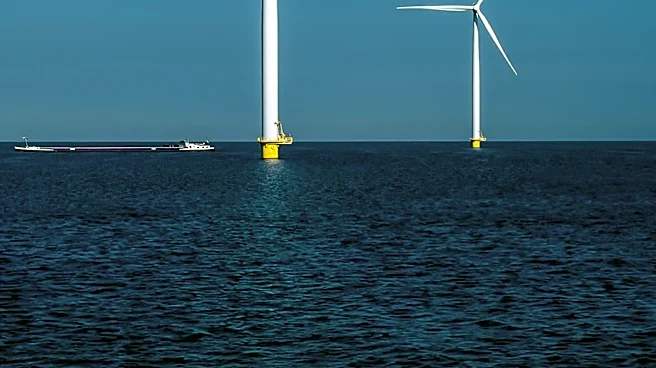
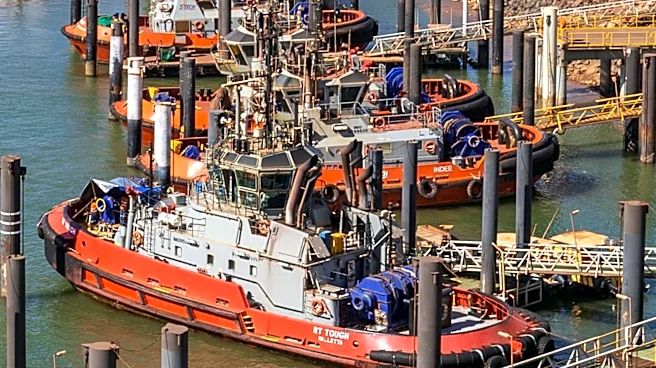
by representatives from AD Ports Group, the Basque Government, and other stakeholders. The shipyard, known for its century-long history in the Spanish naval industry, was recently acquired by SAFEEN Drydocks, a subsidiary of AD Ports Group. This acquisition has brought renewed investment and industrial ambition to the facility. The keel laying ceremony, a traditional maritime event, signifies the start of construction for an offshore support tug, part of an order book targeting the European offshore and renewable energy market.
Why It's Important?
The resumption of operations at Balenciaga Shipyard is crucial for the local economy in Zumaia and the broader Gipuzkoa region, as it re-establishes the shipyard as a key employer and industrial player. The shipyard's focus on the offshore and renewable energy sectors aligns with growing global demand for specialized vessels, potentially positioning it as a competitive builder in these markets. The investment by AD Ports Group underscores confidence in the shipyard's workforce and technical expertise, which could lead to further contracts and economic growth in the region. This development also highlights the strategic importance of revitalizing historic industrial sites to support modern economic needs.
What's Next?
Under its new ownership, Balenciaga Shipyard plans to invest in workforce development, facility upgrades, and supply chain enhancements. The shipyard aims to secure additional contracts in the offshore wind sector, where demand for specialized vessels is increasing. Continued collaboration with local and regional industrial partners is expected to strengthen its role as an anchor employer and contribute to the economic vitality of the Basque Country. The success of these initiatives could serve as a model for other historic industrial sites seeking to adapt to contemporary market demands.