
What's Happening?
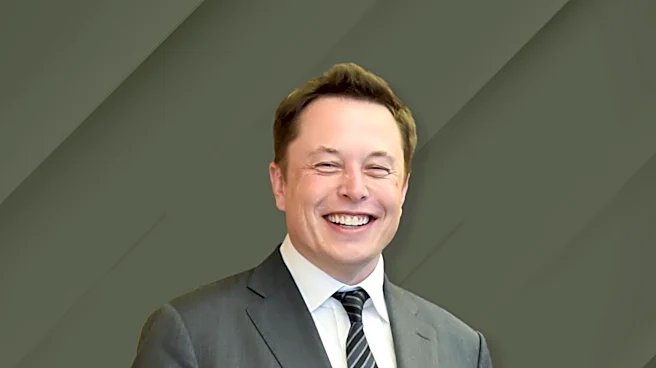
Elon Musk, in an interview with The Economist, predicted that artificial intelligence (AI) will surpass human intelligence within five years, potentially leading to a future where humans may not remain
in control. Musk compared the intelligence gap between AI and humans to that between humans and chimpanzees. He suggested that as AI and robots produce more goods and services, currency could lose its purpose, leading to a future of 'universal high income' where everyone has access to essential needs. Musk also highlighted the potential for deflation as a result of increased production capabilities.
Why It's Important?
Musk's predictions about AI surpassing human intelligence and the economic implications of such advancements are significant for policymakers, businesses, and society at large. The concept of 'universal high income' could reshape economic systems and address issues of inequality. However, the potential for AI to contribute to human extinction, as Musk suggests, raises ethical and safety concerns that need to be addressed. The discussion around AI's impact on the economy and society is crucial as technology continues to advance rapidly.
Beyond the Headlines
Musk's comments highlight the need for a balanced approach to AI development, considering both its potential benefits and risks. The idea of a future where currency becomes obsolete challenges traditional economic models and requires innovative policy solutions. The ethical implications of AI surpassing human intelligence also necessitate discussions around regulation and governance to ensure technology is developed responsibly. Musk's vision of a future with abundant resources and minimal economic disparity presents an optimistic outlook, but achieving this requires careful planning and collaboration across sectors.