






What's Happening?
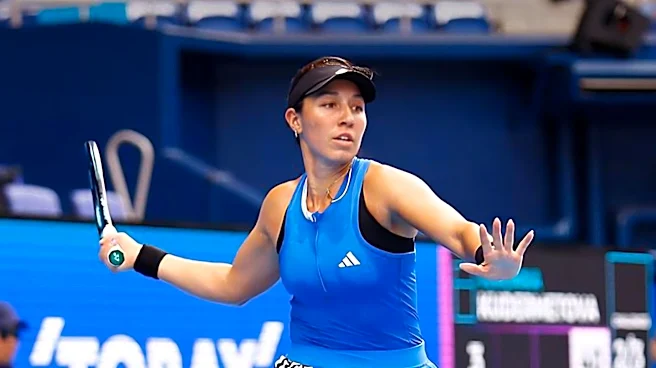
The Women's Tennis Association (WTA) has issued an apology after live microphones were placed on a practice court at the WTA Finals without informing players. This oversight led to a portion of a practice session involving Jessica Pegula being live-streamed,
during which she made comments about fellow player Mirra Andreeva. According to BBC Sport's Ben Collins, Pegula was heard calling Andreeva a "diva" and stating she "needs to be humbled." Pegula's agent, Chris McCormack, confirmed that Pegula was unaware of the microphones or the live stream. McCormack also noted that Pegula has since contacted those involved directly. Despite the critical remarks, Pegula also praised Andreeva's abilities, describing her as moving "like a cat" and having a "perfect serve."
Why It's Important?
This incident highlights significant concerns regarding player privacy and the ethical responsibilities of sports organizations in managing media coverage. The unauthorized live streaming of private conversations, even during a practice session, can create an environment of distrust between athletes and governing bodies. For players like Jessica Pegula, who is the No. 5-ranked player in women's tennis and the daughter of Buffalo Bills and Sabres owners, such incidents can lead to unwanted public scrutiny and potential interpersonal conflicts within the professional circuit. The WTA's apology acknowledges a failure in its duty to inform players, which could have broader implications for how player consent and privacy are handled in professional sports moving forward. It also raises questions about the balance between fan engagement through live content and the protection of athletes' personal space.
What's Next?
The WTA's apology suggests a need for a review of its protocols regarding media coverage and player consent during events. It is likely that new guidelines will be implemented to ensure players are fully informed about any recording or live-streaming activities during practice sessions or other non-match events. This incident could also prompt other sports organizations to re-evaluate their own policies to prevent similar privacy breaches. For Jessica Pegula and Mirra Andreeva, who have never faced each other in singles competition but could potentially meet at the 2026 WTA Finals, the public nature of these comments might add an interesting dynamic to any future match-up. The focus will be on how the WTA rebuilds trust with its athletes and ensures such incidents are not repeated.
Beyond the Headlines
The incident transcends a simple privacy breach, touching upon the broader implications of constant surveillance in the digital age, even for public figures. Athletes, while in the public eye, still maintain a right to privacy, especially in contexts not explicitly designated for public consumption. The WTA's failure to inform players about live microphones underscores a potential disconnect between the commercial drive to create engaging content for fans and the fundamental rights of the individuals who generate that content. This event could spark a wider conversation within professional sports about the boundaries of access, the definition of 'private' spaces for athletes, and the ethical responsibilities of organizations to protect their talent from unintended exposure. It also highlights the power of viral content and how quickly private remarks can become public discourse, impacting reputations and relationships.