







What's Happening?
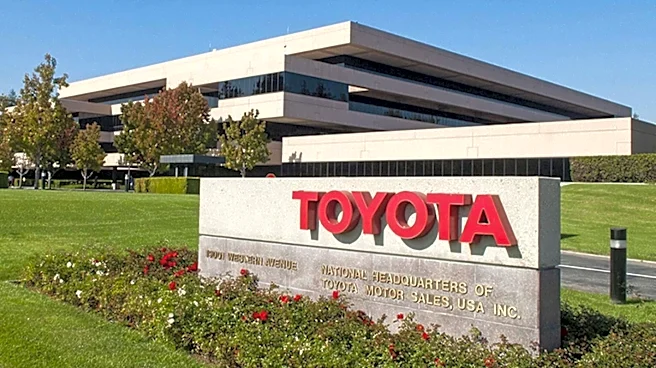
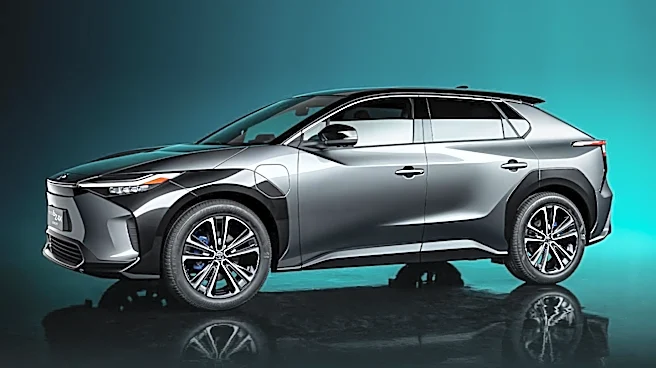
The University of Chicago (UChicago) and Toyota have initiated a multi-year collaborative research agreement aimed at accelerating the development of quantum technologies for future mobility, sustainable transportation, and secure vehicle systems. This
partnership will bridge UChicago's foundational quantum science expertise with Toyota's industrial insights. The collaboration will focus on five key areas: communication, sensing, materials discovery, theoretical modeling and prediction, and electronic properties. Initial projects will draw heavily on the faculty and resources of UChicago’s Pritzker School of Molecular Engineering (UChicago PME), with Toyota aspiring to provide up to $1 million in annual funding. The initiative also seeks to build the future quantum workforce by embedding UChicago PME students into projects that connect academic research with industry needs.
Why It's Important?
This collaboration is significant because it aims to translate cutting-edge quantum science from the laboratory into real-world applications for the automotive and transportation sectors. Quantum technologies have the potential to revolutionize vehicle capabilities, offering advancements in extremely precise sensing, secure communications between vehicles and infrastructure, and the discovery of novel materials for energy storage systems. For the U.S., this partnership fosters innovation and could establish a leadership position in quantum technology applications for mobility, creating new industries and high-tech jobs. It also addresses critical challenges in transportation, such as enhancing vehicle safety, protecting data transmissions, and improving energy efficiency, which have broad societal and economic benefits. The investment in training the next generation of quantum scientists is crucial for maintaining a skilled workforce in this emerging field.
What's Next?
The initiative will launch with five collaborative research projects, with a joint steering committee from UChicago and the Toyota Research Institute of North America providing overall coordination. The first phase of the research will fund up to eight UChicago graduate students, providing them direct exposure to industrial research challenges. Researchers will investigate translating quantum sensor technology to improve vehicle capabilities and explore methods to secure data transmission. The teams also aim to use computational techniques based on quantum simulations to discover new materials for quantum sensors, transceivers, and data links. This long-term research is expected to shape the analysis of energy storage systems over a 20-year horizon, with ongoing developments anticipated in these areas.
Beyond the Headlines
This partnership represents a strategic move by Toyota to look beyond conventional automotive advancements and invest in foundational scientific research that could yield transformative technologies. It highlights a growing trend of major corporations collaborating with academic institutions to tap into cutting-edge scientific discoveries. The ethical and legal implications of highly precise quantum sensing and secure communications in vehicles could be profound, impacting privacy, data ownership, and cybersecurity standards. Furthermore, the development of novel materials for energy storage could accelerate the transition to more sustainable transportation, reducing reliance on fossil fuels and mitigating environmental impact. This collaboration could also set a precedent for how industries and academia can work together to address complex global challenges through advanced scientific inquiry.