





What's Happening?
The global competition for AI chip manufacturing and infrastructure control has reached unprecedented levels in late 2026, as detailed in industry reports released on November 6, 2026. Major technology companies and nations are investing billions into
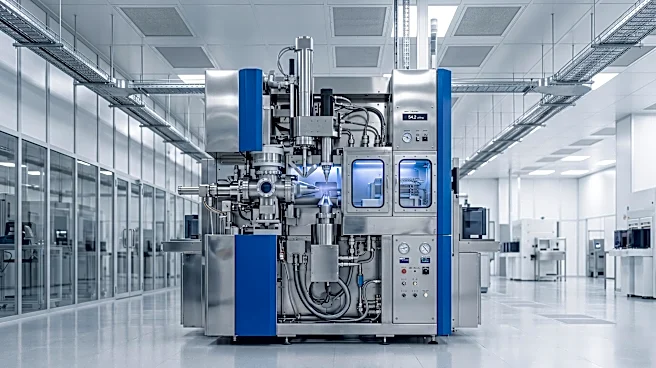
semiconductor facilities and the development of custom AI accelerators. This intense race is reshaping the geopolitical landscape of artificial intelligence. Companies are increasingly developing proprietary AI chips to optimize performance for specific training and inference workloads, moving away from reliance on third-party suppliers. At least seven major tech companies are now pursuing this vertical integration strategy. Concurrently, national governments, including the United States, European Union, and various Asian nations, have launched multi-billion dollar initiatives to expand domestic semiconductor production capacity, driven by both economic benefits and national security concerns. Supply chain disruptions have also prompted companies to diversify sourcing strategies, invest in redundant manufacturing relationships, and strategically stockpile critical components.
Why It's Important?
This escalating global competition signifies a fundamental shift in the AI industry, where access to advanced chip manufacturing and custom accelerators is becoming as critical as algorithmic innovation. Companies that secure these resources are poised to gain substantial advantages in developing larger AI models and deploying applications at scale, potentially determining future leaders in AI breakthroughs. For the U.S., this means a heightened focus on domestic semiconductor production is crucial for maintaining technological leadership and national security. The diversification of supply chains and investments in regional manufacturing hubs aim to mitigate vulnerabilities exposed by past disruptions, ensuring a more resilient infrastructure for AI development. The billions in investment also stimulate economic growth, create high-tech jobs, and foster innovation within the semiconductor and AI sectors, impacting various industries reliant on advanced computing capabilities.
What's Next?
Multiple new chip fabrication facilities are projected to become operational in 2027 and 2028, significantly increasing global manufacturing capacity for advanced AI chips. This influx of capacity will be the physical manifestation of the substantial investments made throughout 2026. The trend of vertical integration by major tech companies is expected to continue, leading to more specialized and efficient AI hardware tailored to specific workloads. Governments will likely continue to implement policies, subsidies, and research partnerships to attract and support domestic chip manufacturers, further decentralizing the global semiconductor supply chain. Companies will also continue to prioritize supply chain resilience through multi-year agreements with multiple foundries and increased investment in packaging and testing facilities closer to end markets. The ongoing infrastructure race will drive continuous innovation in chip design, manufacturing processes, and power delivery solutions to meet the ever-growing demands of AI.
Beyond the Headlines
The intense global competition for AI chip infrastructure carries significant geopolitical implications, potentially leading to increased technological nationalism and trade tensions. Nations may implement stricter export controls or intellectual property protections to safeguard their advancements in AI chip technology, impacting international collaboration and market access. This race could also accelerate the development of new materials and manufacturing techniques, pushing the boundaries of semiconductor science. Ethical considerations surrounding the concentration of AI power in the hands of a few nations or corporations will also become more prominent, raising questions about equitable access to advanced AI capabilities. Furthermore, the massive energy consumption associated with building and operating these advanced manufacturing facilities and AI data centers will intensify the pressure for sustainable practices and renewable energy integration within the semiconductor industry.