







What's Happening?
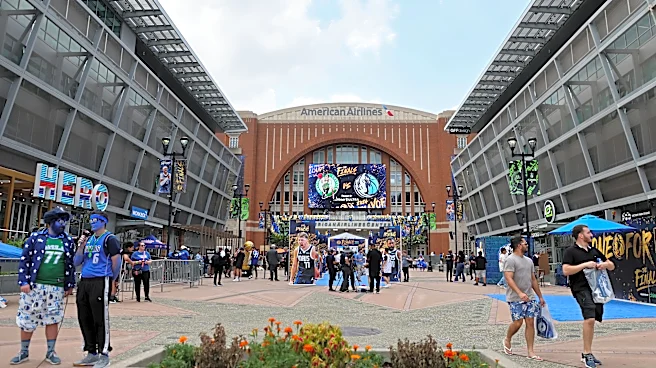
Legends Global, following its acquisition of Nations Group, has secured the owners' representation duties for the Dallas Mavericks' new arena and mixed-use real estate project. This win is a significant milestone for Legends Global, which has been actively
expanding its owners' representation group, particularly in college sports. Chris Nations, who founded Nations Group, presented the case for Legends Global to Dallas Mavericks owner Patrick Dumont, CEO Rick Welts, and President Ethan Casson. The acquisition of Nations Group in September 2025 was driven by the more than $20 billion in active professional and college sports venue projects across the industry. Legends Global aims to provide comprehensive services, combining owners' representation with sales capabilities, a strategy that proved successful in securing the Mavericks' project. The company has also won owners' rep duties for other major projects, including the Kansas City Royals' and Tampa Bay Rays' ballparks, and several college football stadiums.
Why It's Important?
Legends Global's success in securing the Dallas Mavericks' arena project underscores a growing trend in the sports industry: the demand for integrated consultancy services that span project development, sales, and revenue generation. The acquisition of Nations Group and the subsequent wins highlight Legends Global's strategic positioning to capitalize on the multi-billion dollar market for new and renovated sports venues. This development is crucial for U.S. sports teams and universities, as it offers a streamlined approach to managing complex, multi-year projects, from initial feasibility studies to premium sales. For the Dallas Mavericks, partnering with Legends Global means leveraging a comprehensive team to ensure the successful development of their new arena and mixed-use real estate, which is vital for future revenue streams and fan engagement. The emphasis on combining owners' representation with sales expertise demonstrates a shift towards a more holistic project management model, benefiting clients by potentially increasing efficiency and maximizing financial returns. This integrated approach could become a benchmark for future large-scale sports infrastructure projects across the country.
What's Next?
Legends Global plans to continue its expansion, with ten new hires and a focus on executive leadership training in 2027. The company is also heavily investing in software and artificial intelligence to enhance data evaluation, aiming for faster and more accurate cost comparisons and controls, which are critical given that construction costs typically account for 75% of a project's budget. This technological integration is designed to build consistency in the owners' representation team's approach and results. The success with the Mavericks' project is expected to energize further growth and solidify Legends Global's position as a leading firm in the sports venue development sector. The company's strategy of combining owners' representation with sales capabilities will likely be replicated in future bids, as it has proven to be a compelling offering for clients like the Mavericks. This ongoing evolution in services and technology will shape how major sports infrastructure projects are managed and executed in the coming years.
Beyond the Headlines
The strategic moves by Legends Global, particularly its acquisition of Nations Group and subsequent project wins, reflect a deeper evolution within the sports business landscape. The increasing complexity and financial scale of sports venue development necessitate specialized, integrated services that go beyond traditional construction management. The emphasis on technology, including AI, for data analysis and cost control, points to a future where efficiency and predictive analytics will be paramount in large-scale infrastructure projects. This trend also highlights the professionalization of owners' representation, moving from an informal network of experienced individuals to a structured, data-driven consultancy model. The success of this integrated approach could lead to a consolidation of services within the industry, with larger firms offering end-to-end solutions. Furthermore, the development of mixed-use real estate alongside sports arenas signifies a broader vision for these venues as economic anchors and community hubs, driving urban development and creating year-round revenue opportunities beyond game days.