



What's Happening?
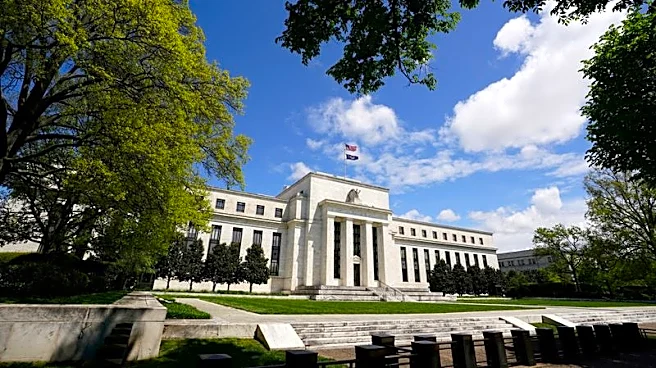
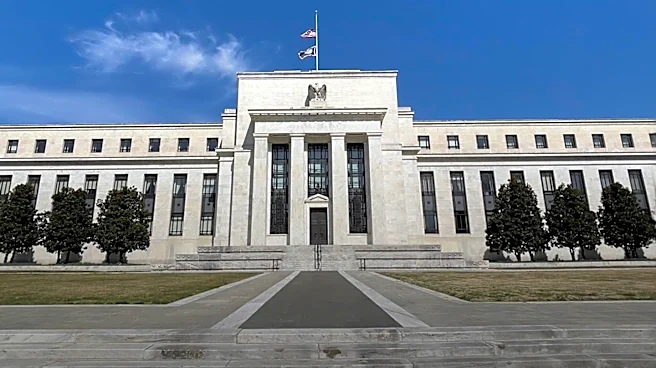
The Federal Reserve has decided to keep the federal funds rate unchanged at 3.5% to 3.75%, citing concerns over inflation and geopolitical tensions, particularly the conflict in Iran. The decision was made with a 9-3 vote, with dissent from Cleveland
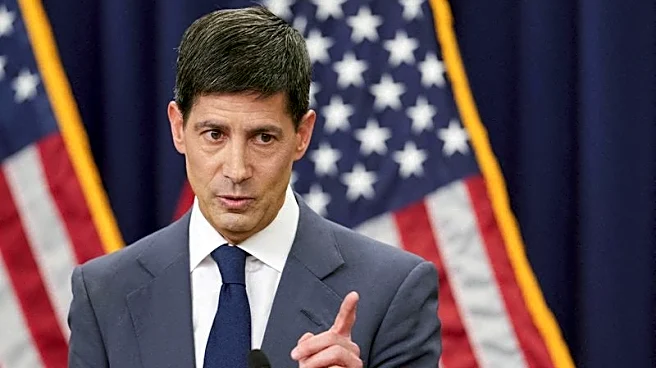
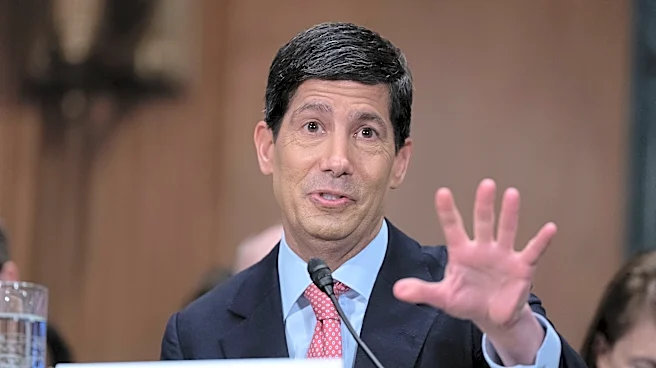
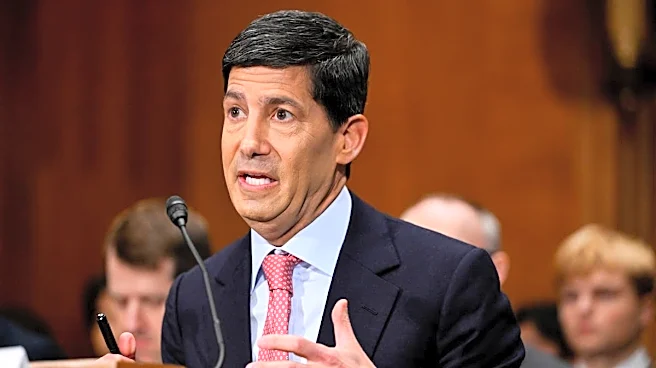
Fed President Beth Hammack, Minneapolis Fed President Neel Kashkari, and Dallas Fed President Lorie Logan, who advocated for a rate hike. Fed Chair Kevin Warsh emphasized the importance of price stability and the Fed's commitment to its inflation target. The decision reflects the Fed's cautious approach amid economic uncertainty and elevated inflation.
Why It's Important?
The Fed's decision to maintain interest rates has significant implications for the U.S. economy, affecting borrowing costs, consumer spending, and investment. The decision underscores the Fed's focus on controlling inflation while supporting economic growth. The ongoing geopolitical tensions and their impact on energy prices add complexity to the Fed's policy decisions. The decision also highlights the internal debate within the Fed regarding the appropriate monetary policy stance, reflecting differing views on inflation and economic stability.
What's Next?
The Fed will continue to monitor economic indicators, including inflation and employment data, to guide future policy decisions. The potential for future rate hikes remains, depending on economic conditions and inflation trends. Stakeholders, including businesses and consumers, will closely watch the Fed's actions and communications for insights into future policy directions. The Fed's commitment to price stability suggests a cautious approach to future rate adjustments, with implications for economic planning and market expectations.