
What's Happening?
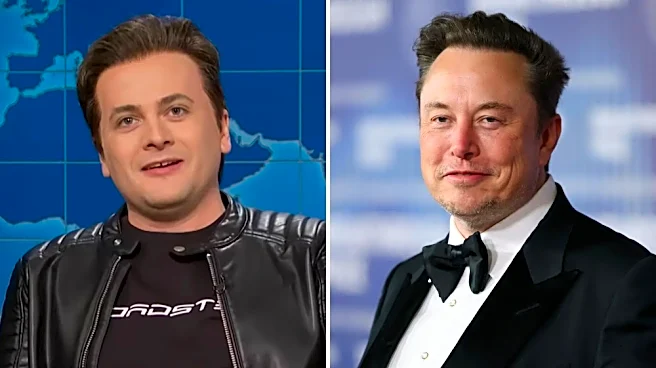
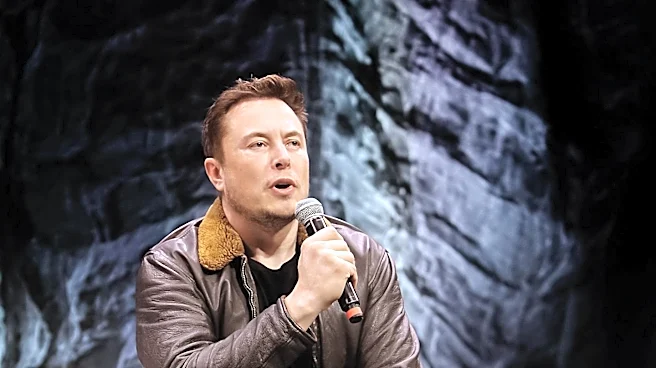
Elon Musk has publicly rated comedian Jeremy Culhane's impression of him on 'Saturday Night Live' (SNL) as a '5 out of 10,' stating, 'They need to try harder.' Culhane has portrayed Musk in recent SNL episodes,
including a 'Weekend Update' segment and a cold open featuring tech moguls discussing Jensen Huang's alleged affair. This is not the first time Musk has reacted to SNL's portrayal of him; he previously hosted the show in May 2021, an appearance that drew criticism from some cast members. Former SNL star Chloe Fineman claimed that Musk made her cry during his hosting stint by criticizing a sketch she had written. Musk's comments were made on X, the social media platform he owns.
Why It's Important?
Elon Musk's direct engagement with his portrayal on a prominent U.S. television show like SNL highlights the intersection of celebrity, media, and public perception in the digital age. His critique, delivered on his own social media platform, can influence public discourse around both his image and the show's comedic approach. For SNL, a show known for its political and cultural commentary, Musk's reaction underscores the challenges of satirizing powerful public figures who can directly respond to their portrayals. This interaction also reflects the broader trend of public figures using social media to control their narratives and engage with criticism, bypassing traditional media filters. The incident with Chloe Fineman further illustrates the potential for friction between public figures and the creative teams tasked with satirizing them, revealing the personal impact of such interactions within the entertainment industry.
What's Next?
Musk's public critique may prompt SNL's writers and performers to either refine their impression of him or continue with their current comedic approach, potentially leading to further public commentary from Musk. The ongoing dynamic between Musk and SNL could become a recurring theme, influencing future sketches and public reactions. This interaction also sets a precedent for how other public figures might engage with their comedic portrayals in mainstream media. The incident could also reignite discussions about the boundaries of satire, the responsibilities of public figures in responding to it, and the impact of social media on the relationship between celebrities and the entertainment industry. The entertainment industry will likely continue to navigate how to portray influential figures in an era where direct, real-time feedback is common.
Beyond the Headlines
Beyond the immediate comedic and celebrity aspects, this interaction touches upon deeper themes of artistic freedom versus public figure sensitivity. It raises questions about the power dynamics between a media institution like SNL and an influential individual like Elon Musk, who commands a massive online following. The expectation for comedians to 'try harder' could be interpreted in various ways, from a call for more accurate or nuanced satire to a demand for more favorable portrayals. This situation also reflects the evolving nature of public discourse, where traditional media outlets are no longer the sole arbiters of narrative, and individuals can directly challenge or comment on their representations. The incident with Fineman also highlights the often-unseen emotional labor involved in creative work and the vulnerability of artists when their work is directly dismissed by the subject of their art.