




What's Happening?
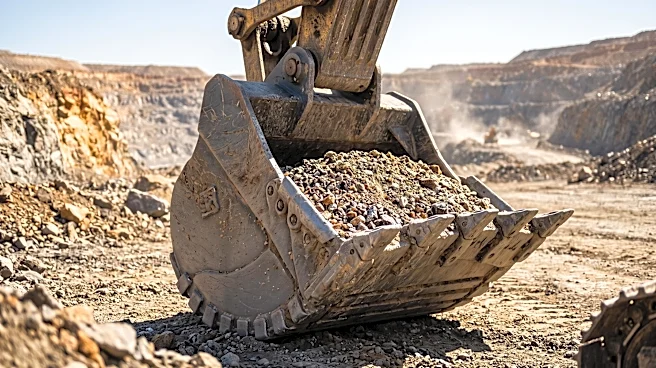
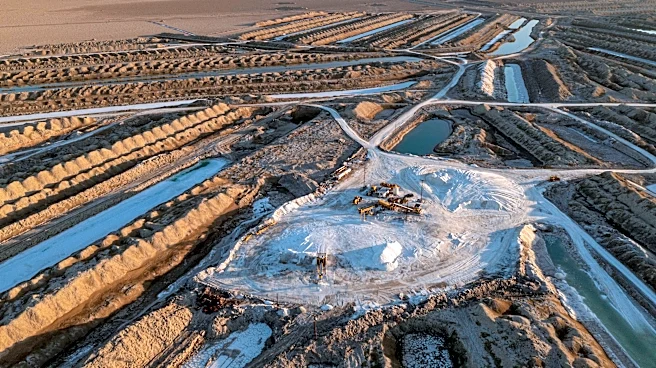
WE Soda Ltd. has announced a strategic shift for its Westvaco facility near Green River, Wyoming, transitioning from dry ore underground mining to solution mining. This change, which will be implemented in stages over the next two years, is a response
to the significant impact of low-cost Chinese soda ash exports on global pricing. The company plans to reduce its Wyoming workforce from over 850 to approximately 500 roles, with reductions beginning in Q1 2027 and continuing through 2028. WE Soda has initiated discussions with the United Steelworkers union regarding the management of this transition and has issued formal notices as required by U.S. law. As part of this repositioning, WE Soda will decrease its sales to export markets, focusing instead on the United States, Canada, and Mexico for soda ash, and on global specialty products customers. Total Wyoming production is expected to decrease by over 1.5 million metric tonnes per year, reflecting the reduction in commercially unviable export sales. The company emphasizes that solution mining is a method it already successfully employs at other facilities, including parts of Westvaco and its Granger operation, as well as in Turkey.
Why It's Important?
This strategic pivot by WE Soda highlights the intense global competitive pressures faced by U.S. mining operations, particularly from lower-cost producers like China. The decision to reduce the workforce by over 350 jobs will have a significant economic impact on Sweetwater County, Wyoming, affecting families and the local community. The shift to solution mining, while aimed at securing the long-term viability of WE Soda's Wyoming operations, underscores the need for U.S. industries to adapt to changing market dynamics and cost structures. For the U.S. soda ash market, this means a potential re-prioritization of domestic and near-shore supply chains, as WE Soda focuses on North American customers. The reduction in export capacity could also influence global soda ash supply dynamics, potentially creating opportunities or challenges for other producers and consumers worldwide. This move reflects a broader trend where U.S. companies are forced to re-evaluate their global market strategies in the face of aggressive international competition and evolving economic realities.
What's Next?
The transition to solution mining at WE Soda's Westvaco facility will unfold progressively over the next two years, with workforce reductions commencing in Q1 2027. The company will engage in ongoing discussions with the United Steelworkers union to manage the impact on employees, aiming to offer alternative roles where possible and provide support for those who leave, including career guidance and retraining. WE Soda plans to accelerate its development of primary solution mining in Wyoming, which it identifies as the lowest-cost method for soda ash production and a foundation for future growth in the region. The company will continue to supply its North American soda ash customers and global specialty products customers, honoring existing contracts. Certain export market customers may be supplied from WE Soda's operations in Turkey where commercially viable. A further update on the transition, including lower volumes and one-off restructuring costs, is expected with the company's third-quarter results on November 25, 2026.
Beyond the Headlines
The decision by WE Soda to transition its Wyoming operations and reduce its workforce extends beyond immediate economic impacts, touching upon broader themes of industrial resilience, technological adaptation, and community support in the face of global economic shifts. The move to solution mining represents a technological evolution aimed at improving cost efficiency and sustainability, potentially setting a precedent for other mining operations facing similar pressures. However, the significant job losses underscore the human cost of such transitions, highlighting the critical need for robust community support programs, retraining initiatives, and economic diversification efforts in regions heavily reliant on single industries. This situation also brings to the forefront the ongoing debate about fair trade practices and the impact of foreign competition on domestic manufacturing and resource extraction sectors. The long-term success of WE Soda's strategy will depend not only on its operational efficiency but also on its ability to navigate labor relations, maintain community trust, and adapt to evolving market demands for soda ash and its derivatives.