




What's Happening?
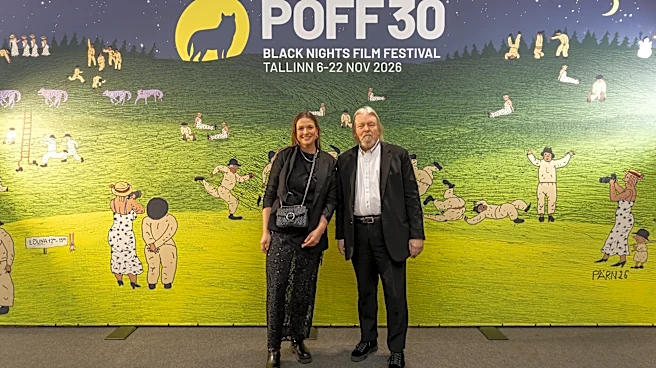
The 30th Tallinn Black Nights Festival concluded with a series of film accolades and industry tributes, marking its growing influence in Northern Europe. Under the leadership of founder Tiina Lokk and artistic director Triin Tramberg, the festival showcased
81 Baltic films and co-productions, with 124 public screenings selling out. The industry event, Industry @ Tallinn & Baltic Event, attracted 930 participants from 57 countries. U.S. stars like Griffin Dunne and Tim Blake Nelson attended, and indie filmmaker Dylan Stephen Levers won the top award in the Rebels With a Cause competition for 'Pop Pop.' A significant theme was the pressure on freedom of speech, with Iran-born actress Golshifteh Farahani condemning U.S. studios' narrative control regarding the Middle East, and Iranian authorities blocking filmmakers from attending. The festival also honored Tiina Lokk for her support of Ukrainian cinema.
Why It's Important?
The Tallinn Black Nights Festival's growth signifies the increasing global reach and importance of film festivals beyond traditional hubs. Its focus on Baltic cinema highlights the region's emerging talent and industry capabilities, attracting international co-production interest and investment. The strong U.S. presence, including actors and filmmakers, indicates a growing cross-cultural exchange and potential for new collaborations between American and European film industries. Critically, the festival served as a platform for discussing pressing issues like freedom of speech and censorship, particularly concerning Iranian filmmakers and U.S. studios' portrayal of the Middle East. This underscores cinema's role as a medium for social commentary and advocacy, influencing global discourse on human rights and artistic expression.
What's Next?
The festival's success and the discussions it fostered are likely to influence future programming and industry initiatives. The spotlight on Baltic talent and increased film production incentives in countries like Estonia (with its cash rebate now at 40%) suggest a continued rise in the region's film output and international co-productions. The concerns raised about censorship and narrative control may prompt further dialogue within the global film community, potentially leading to more advocacy for artistic freedom and diverse storytelling. For U.S. filmmakers and producers, the festival's growing industry hub could become a more significant destination for scouting talent, securing funding, and exploring international partnerships, especially with the Baltic region's expanding infrastructure and support schemes.
Beyond the Headlines
Beyond the immediate awards and industry deals, the Tallinn Black Nights Festival reflects broader geopolitical and cultural shifts. The condemnation of U.S. studios' narrative control by an Iranian actress highlights ongoing debates about representation, cultural sensitivity, and the power dynamics in global media. The festival's unwavering support for Ukrainian cinema, symbolized by the 'Order of Princess Olga' bestowed upon Tiina Lokk, underscores the role of cultural institutions in times of conflict, using film as a tool for solidarity and preserving national identity. This blend of artistic celebration and socio-political engagement positions the festival not just as an entertainment event, but as a significant forum for addressing global challenges through the lens of cinema, influencing how stories are told and perceived internationally.