








What's Happening?
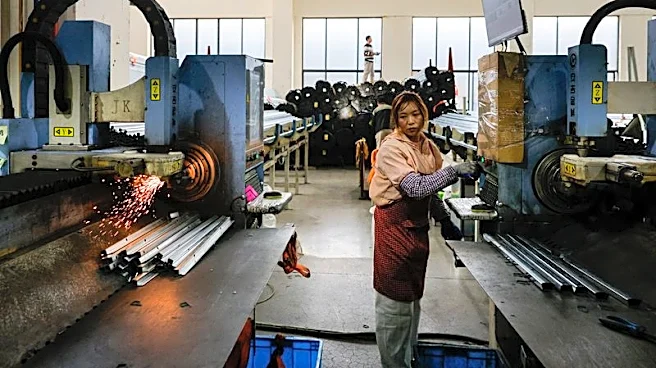
Producer prices in China experienced their fastest growth since June 2022, accelerating for the third consecutive month. The Producer Price Index (PPI) for October registered 5.7%, surpassing the 5.3% forecast by economists surveyed by Reuters. This increase
was primarily driven by a significant rise in prices within the mining and raw materials industries, attributed to strong external demand, according to Zhang Zhiwei, president and chief economist at Pinpoint Asset Management. Conversely, consumer inflation in China decelerated to 0.7% in October, marking its first slowdown after two months of increases. This figure fell short of the 0.8% expectation from Reuters-polled economists and was lower than September's 0.9%. Core inflation, excluding food and energy prices, also decreased to 0.8% from 1% in the previous month. While gasoline prices contributed to the rise in consumer prices, this was offset by a larger-than-expected drop in food prices, as reported by Dong Lijuan, chief statistician of the urban division at China's National Bureau of Statistics.
Why It's Important?
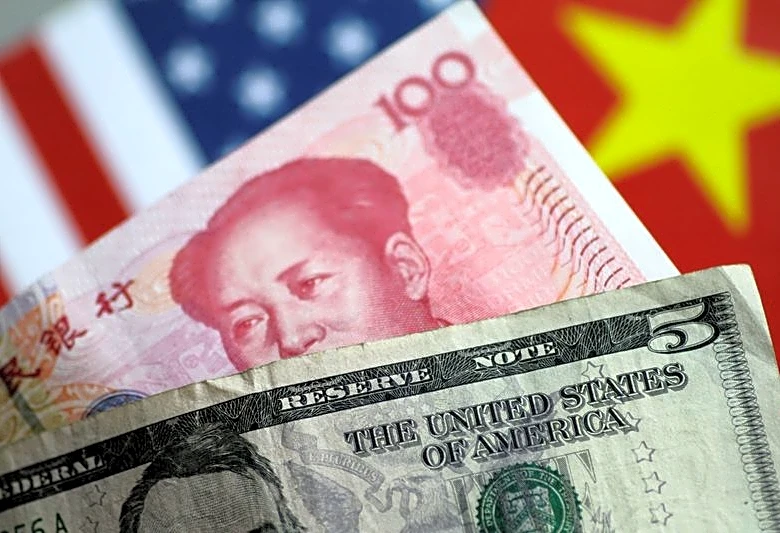
The divergence between China's wholesale and consumer inflation rates has significant implications for global supply chains and the U.S. economy. A surge in producer prices in China, driven by strong external demand, suggests that the cost of goods manufactured in China will likely increase. This could translate into higher import costs for U.S. businesses that rely on Chinese-made components or finished products, potentially contributing to inflationary pressures within the U.S. market. While China's consumer inflation is slowing, indicating weaker domestic demand, the robust external demand for its industrial output could still impact global pricing. U.S. consumers might face higher prices for a range of goods, and businesses could see their profit margins squeezed if they cannot fully pass on increased import costs. This situation highlights the interconnectedness of global economies and how inflation trends in one major manufacturing hub can ripple across international markets, affecting U.S. economic stability and consumer purchasing power.
What's Next?
The Chinese economy has recently shown signs of expansion, with faster-than-expected growth in the third quarter and a strong performance in retail sales in September. However, domestic demand remains weak, largely due to challenges in the property market, which Zhang Zhiwei notes shows no clear signs of stabilization. This weakness in the property sector is impacting household consumer confidence and local government revenue, thereby hindering overall economic momentum. The mainland Chinese CSI 300 index saw a 0.56% gain following the data release. Future developments will likely depend on whether China can stimulate domestic demand and stabilize its property market, which could influence its overall economic trajectory and, consequently, global trade and inflation dynamics. The ongoing disparity between producer and consumer inflation will be a key indicator to watch for its potential impact on international markets.
Beyond the Headlines
The contrasting inflation trends in China—rising wholesale prices versus slowing consumer inflation—reveal a complex economic landscape. The strong external demand driving producer prices suggests a robust global appetite for Chinese industrial goods, potentially indicating a recovery in international trade. However, the subdued consumer inflation points to underlying weaknesses in China's domestic economy, particularly concerning household consumption and the property sector. This imbalance could lead to a 'two-speed' economy within China, where export-oriented industries thrive while domestic sectors struggle. For the U.S., this could mean continued availability of goods but at potentially higher prices due to increased production costs in China. The long-term implications include a potential shift in global manufacturing strategies as companies assess the stability and cost-effectiveness of Chinese production amidst these inflationary pressures, potentially leading to diversification of supply chains and a re-evaluation of global trade dependencies.