




What's Happening?
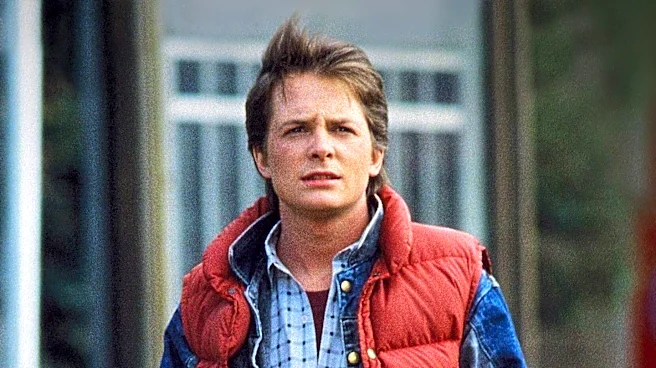
Actor Michael J. Fox recounted a dangerous incident during the filming of 'Back to the Future Part III' in 1989, where he was nearly hanged on set. The scene involved his character, Marty McFly, being strung up by a noose. Initially, Fox used a wooden
box for support during takes, but to achieve a more realistic swinging effect, he opted to perform the stunt without it. During one take, he miscalculated the positioning of his hand, leading to the noose blocking his carotid artery and causing him to briefly lose consciousness. The crew did not immediately realize he was in actual distress, believing his unconscious state was part of his acting. This event, detailed in his autobiography 'Lucky Man: A Memoir,' highlights the risks involved in filmmaking even with stunt doubles and safety protocols.
Why It's Important?
This incident underscores the inherent dangers that actors can face on film sets, even in an era with established stunt teams and safety regulations. While 'Back to the Future Part III' went on to be a commercial success, grossing $245 million, the near-fatal accident reveals the pressures on actors to deliver authentic performances, sometimes at significant personal risk. It also brings to light the potential for miscommunication or misjudgment on set, where the line between acting and genuine danger can become blurred. The fact that the crew initially mistook Fox's unconsciousness for acting emphasizes the need for stringent safety oversight and clear protocols to distinguish between performance and actual emergencies, protecting the well-being of cast and crew.
What's Next?
While this specific incident occurred decades ago, its retelling serves as a reminder for ongoing discussions within the film industry regarding set safety and actor welfare. The industry continues to evolve its safety standards, often in response to past accidents. Future productions will likely continue to prioritize the use of specialized stunt professionals and advanced CGI to minimize direct risks to actors, especially in scenes involving potentially dangerous physical actions. The anecdote may also contribute to broader conversations about the psychological and physical demands placed on actors, encouraging more transparent communication and robust safety measures on film sets to prevent similar occurrences.
Beyond the Headlines
The near-fatal stunt experienced by Michael J. Fox touches upon the broader ethical considerations in filmmaking, particularly the balance between artistic realism and the safety of performers. It highlights a period in Hollywood where certain risks were perhaps more readily accepted or less scrutinized than they are today. This event, along with others throughout film history, has contributed to the development of more rigorous safety standards and the increased reliance on stunt coordinators and visual effects. It also speaks to the dedication and sometimes extreme measures actors take to bring their characters to life, offering a glimpse into the less glamorous and more perilous aspects of movie production that often remain unseen by the audience.