





What's Happening?
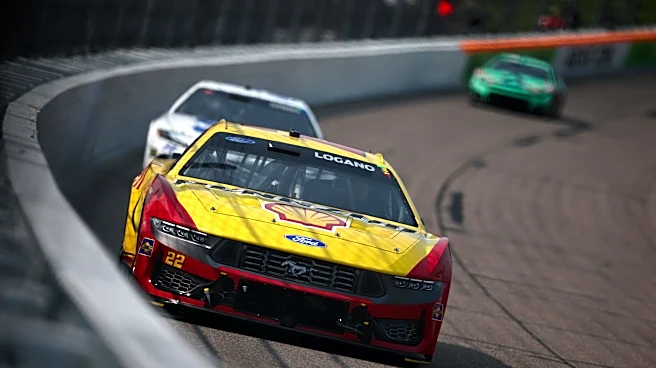
Joey Logano, a three-time NASCAR Cup Series champion for Team Penske, has provided insights into the design philosophy behind Ford's new Mustang Dark Horse SC Cup car for the 2027 season. Logano explained that the development process involved making strategic
trade-offs, where drivers and crew chiefs provided input on crucial performance aspects like downforce and center of pressure, acknowledging that 'you can’t just have it all.' The final design, unveiled recently, features a more aggressive nose aimed at improving aerodynamics and increasing downforce. Other aesthetic and functional changes include new headlight surrounds, reshaped lower grille openings, new lower bumper corners, and smoother front fender creases. Ford Racing's global director, Mark Rushbrook, stated that the car was designed to uphold the Mustang's racing heritage and position Ford to win more races and championships. Ryan Blaney's crew chief, Jonathan Hassler, previously noted that intermediate and larger tracks had been a weak spot for Ford, suggesting the new design aims to address these performance gaps.
Why It's Important?
The introduction of a new car model like the Mustang Dark Horse SC Cup car is a pivotal moment for Ford in NASCAR, potentially reshaping its competitive standing. The emphasis on aerodynamic improvements and downforce directly addresses performance challenges Ford teams have faced, particularly on larger tracks. A more competitive car can lead to increased race wins and championship contention, which is crucial for Ford's brand image and marketing efforts within motorsports. For drivers like Logano and Blaney, a well-designed car provides a better platform for success, impacting their careers and team performance. The collaborative design process, involving drivers and engineers, highlights the intricate balance between aesthetic appeal (to resemble the street vehicle) and on-track performance. This development signifies Ford's commitment to investing in its NASCAR program to gain a competitive edge against rivals like Chevrolet and Toyota, influencing the overall dynamics of the Cup Series.
What's Next?
Ford's Cup drivers, including Joey Logano and Ryan Blaney, are set to debut the new Mustang Dark Horse SC Cup car at the Daytona 500 in February. This will be the first real-world test of the car's performance capabilities and the effectiveness of the design trade-offs made during its development. Teams will spend the intervening period fine-tuning their setups and strategies to maximize the new car's potential. Competitors from other manufacturers will closely observe Ford's performance to gauge the impact of the new design and potentially adapt their own development strategies. The initial races of the 2027 season will be critical in determining whether the new Mustang successfully addresses Ford's previous performance weaknesses and positions them as stronger championship contenders. Driver feedback from early races will also be crucial for any subsequent adjustments or refinements to the car's setup and performance characteristics.
Beyond the Headlines
The development of a new NASCAR Cup car involves a complex interplay of engineering, aerodynamics, and driver feedback, reflecting the cutting edge of automotive racing technology. The concept of 'trade-offs' highlighted by Logano underscores the inherent challenges in designing a vehicle that must balance multiple performance parameters within strict regulatory frameworks. This iterative process of design, testing, and refinement is a microcosm of innovation in the automotive industry, where marginal gains can translate into significant competitive advantages. Furthermore, the visual connection between the race car and its street-legal counterpart (the Mustang Dark Horse SC) serves a crucial marketing function, linking racing success directly to consumer appeal and brand identity. This continuous evolution of race car technology not only pushes the boundaries of performance but also influences future advancements in production vehicles, albeit indirectly, through shared engineering principles and material science innovations.