


What's Happening?
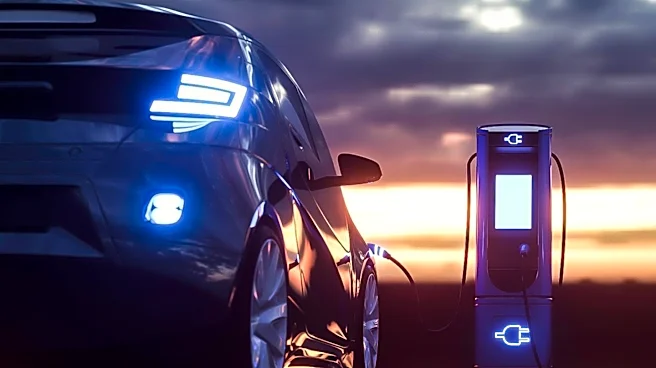
BYD has officially unveiled its new Whale MPV at the Guangzhou Auto Show, confirming it as the first MPV in its Ocean range. The vehicle will be available in both battery-electric (BEV) and plug-in hybrid (PHEV) variants, with the BEV model boasting a claimed
electric range of 900km on China’s CLTC cycle, and the PHEV offering 400km of electric range. Both versions will support BYD’s Flash charging technology, capable of charging from 10% to 97% in just nine minutes. The Whale measures 5,270mm in length with a 3,130mm wheelbase, matching the dimensions of the Fang Cheng Bao Ti 9, suggesting potential platform sharing. Sales are slated to begin in China in the first quarter of 2027. The vehicle features conventional mechanical door handles, adhering to upcoming Chinese safety regulations, and includes a roof-mounted lidar sensor for its God’s Eye driver assistance system. Expected pricing in China is around CN¥300,000 (US$44,700).
Why It's Important?
The introduction of the BYD Whale MPV, particularly its long-range electric option and rapid Flash charging capability, marks a significant development in the electric vehicle market, especially for larger family vehicles. This addresses key concerns of range anxiety and charging times that have historically favored plug-in hybrids in the heavy family vehicle segment. By offering a competitive electric MPV, BYD aims to capture a larger share of the family vehicle market, providing a direct competitor to existing models like the Hyundai Staria Electric and VW ID. Buzz in potential export markets. The strategic pricing positions the Whale as a mainstream family choice below BYD’s premium Denza D9, creating a clearer product ladder within the company’s MPV offerings. This move could accelerate the transition to electric vehicles in the MPV segment, influencing consumer preferences and pushing other manufacturers to enhance their electric MPV offerings.
What's Next?
Following its unveiling, the BYD Whale is set to commence sales in China during the first quarter of 2027. The market will closely monitor its performance, particularly its ability to attract younger families and compete with established MPV models. BYD’s decision on whether to export the Whale will be a critical next step, as its entry into international markets, especially Europe, could intensify competition in the large battery-electric MPV segment. The success of its Flash charging technology will also be a key factor in its market acceptance, potentially setting new benchmarks for EV charging speeds. Further details regarding battery sizes, interior configurations, and specific export plans are anticipated as the launch date approaches. The vehicle's performance in real-world conditions, particularly its range and charging efficiency, will be crucial for its long-term success and market penetration.
Beyond the Headlines
The BYD Whale’s design and technological features reflect broader trends in the automotive industry, particularly the increasing demand for versatile, family-friendly electric vehicles. The emphasis on long range and ultra-fast charging signifies a maturing EV market where convenience and practicality are becoming as important as environmental benefits. The potential platform sharing with the Fang Cheng Bao Ti 9 highlights BYD’s strategy of leveraging common architectures to enter niche segments efficiently and at lower development costs, a practice that could become more prevalent across the industry. Furthermore, the inclusion of advanced driver assistance systems like the God’s Eye, powered by lidar, underscores the ongoing integration of sophisticated autonomous driving technologies into mainstream vehicles. This development could also influence urban planning and charging infrastructure development, as cities adapt to accommodate a growing fleet of long-range, fast-charging electric vehicles.