




What's Happening?
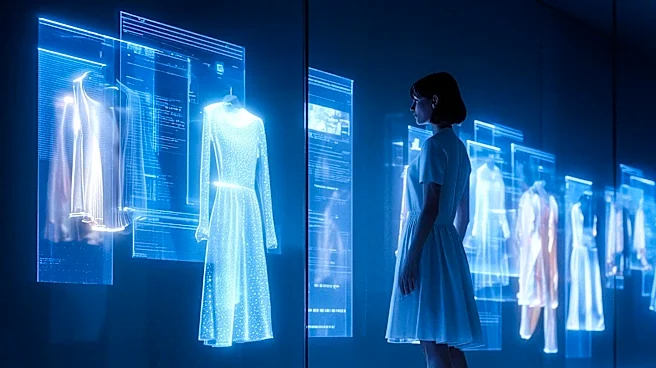
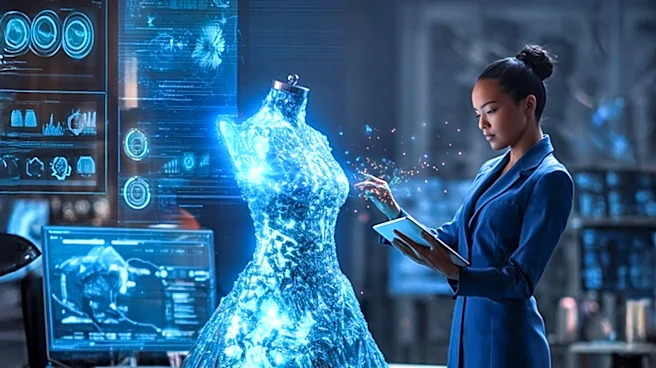
The fashion industry is increasingly adopting AI-generated models and digital clones for marketing content, leading to significant cost reductions for brands but posing an existential threat to human models. Companies are exploring various AI applications,
including face swaps, creating digital twins of models for reuse without additional compensation, and using models' images to train AI tools. Fast-fashion retailers like Mango and About You have already implemented AI-generated models at scale, with About You's Scayle Studios business offering digital imagery services to other retailers, promising over 90% production-cost reduction. High-end brands like Moncler and Gucci have also experimented with AI in campaigns, though some are proceeding more cautiously. Modeling agencies are reporting a decline in bookings, and photo studios are closing as brands shift towards AI solutions. Models express concerns about the inability to differentiate between real and AI models and the potential for their images to be replicated without fair compensation or consent.
Why It's Important?
The widespread adoption of AI in fashion modeling has profound economic and ethical implications. For brands, it offers substantial cost savings and increased efficiency in content creation, allowing for rapid deployment of new collections. However, for human models, this technology represents a significant threat to their livelihoods, as they face the risk of being replaced by synthetic models or having their images used and altered without proper compensation or control. The lack of comprehensive regulation governing the ownership and use of digital twins exacerbates this issue, leaving models vulnerable to exploitation. The shift also impacts supporting industries like photography studios, which are experiencing closures. This transformation highlights a broader societal challenge of how AI will reshape creative industries and the workforce, necessitating new legal frameworks and ethical guidelines to protect individuals' rights and ensure fair practices.
What's Next?
The fashion industry is likely to see continued expansion of AI-generated imagery, with more brands adopting these technologies for cost efficiency and speed. This will intensify the pressure on human models and modeling agencies to adapt. Regulatory bodies, particularly in the U.S., are beginning to address these challenges; the New York State Fashion Workers Act, effective June 2025, makes it illegal to create or modify model replicas without explicit consent. This legislation could serve as a precedent for similar laws in other states and at the federal level, as advocated by organizations like the Model Alliance. The British Fashion Model Agents Association has also developed an AI code of practice, emphasizing consent and ownership of digital twins, though binding regulation is still lacking in Britain and Europe. Future developments will likely involve ongoing legal battles, increased advocacy for models' rights, and the potential for new business models within the modeling industry that integrate AI ethically.
Beyond the Headlines
The integration of AI into fashion modeling extends beyond immediate economic impacts, touching upon deeper ethical and philosophical questions about authenticity, identity, and labor in the digital age. The ability to create indistinguishable AI models blurs the lines between reality and simulation, raising concerns about consumer perception and the potential for manipulation. Ethically, the practice of using models' images to train AI without explicit, well-compensated consent, or the creation of 'digital twins' that can be endlessly reused, challenges traditional notions of intellectual property and personal rights. This trend also highlights the broader societal debate on the future of work in an AI-driven economy, where creative professions, once thought to be immune to automation, are now directly impacted. The fashion industry's response to these challenges could set precedents for other creative fields grappling with similar technological advancements, emphasizing the urgent need for robust ethical frameworks and legal protections.