





What's Happening?
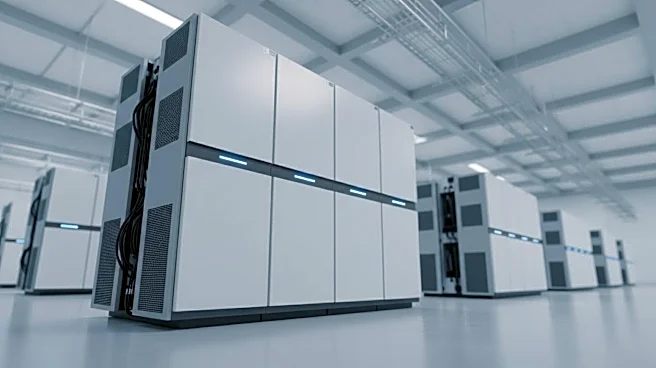
LG Energy Solution Ltd., in partnership with Honda Motor Co., has commenced mass production of lithium-ion battery cells for energy storage systems (ESS) in the United States. The production is taking place at a facility in Jeffersonville, Ohio, operated
by their joint venture, L-H Battery Co. Initially intended for electric vehicle (EV) battery production, the plant has shifted focus to ESS batteries due to changes in U.S. regulatory conditions and the promising growth of the energy storage market. The battery cells produced will be distributed through LG Energy Solution Vertech, the company's North American subsidiary, for various applications including power grid, commercial, industrial, and residential uses. L-H Battery plans to maintain a flexible production strategy, also manufacturing battery cells for hybrid EVs based on market demand.
Why It's Important?
This development is significant as it marks a strategic expansion of LG Energy Solution's manufacturing capabilities in North America, particularly in the rapidly growing ESS market. The shift from EV to ESS battery production reflects a response to evolving regulatory landscapes and market demands in the U.S. The energy storage market in North America is projected to grow substantially, with battery shipments expected to rise from 88 gigawatt-hours (GWh) in the previous year to 485 GWh by 2030, and further to 976 GWh by 2035, according to SNE Research. This growth presents substantial opportunities for companies like LG Energy Solution and Honda to establish a strong foothold in the market, potentially influencing energy storage solutions and infrastructure development across the U.S.
What's Next?
L-H Battery Co. plans to continue adapting its production portfolio to meet market demands, balancing between ESS and hybrid EV battery production. As the North American ESS market expands, the joint venture may explore further investments in production capacity and technology to enhance competitiveness. Stakeholders in the energy and automotive sectors will likely monitor these developments closely, as they could impact supply chains, regulatory policies, and market dynamics. The success of this venture could also encourage other companies to invest in similar initiatives, further accelerating the growth of the energy storage industry in the U.S.