








What's Happening?
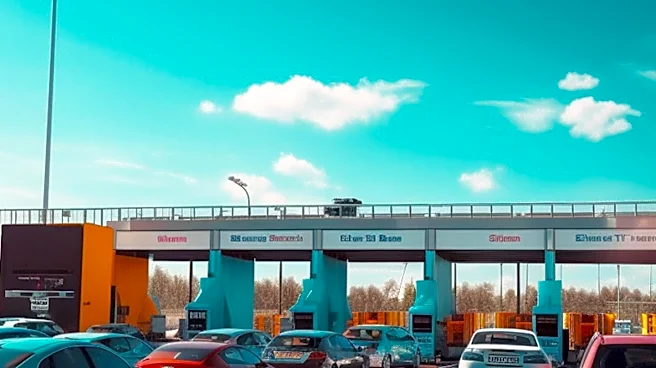
Travelers renting cars in Miami and South Florida are frequently encountering unexpected and often substantial charges related to toll roads. The region's extensive network of cashless toll points and express lanes makes it difficult for drivers to avoid
tolls, even unintentionally. Rental car companies often have complex billing structures for tolls, which can include daily usage fees, per-toll convenience fees, and administrative fees, in addition to the actual toll amounts. These additional fees can significantly inflate the final bill, often overshadowing the cost of the tolls themselves. Many rental agreements automatically enroll customers in toll programs, and opting out can be challenging or impractical due to the prevalence of cashless tolling. Customers are advised to thoroughly understand the toll device's presence, billing methods, and fee structures before leaving the rental lot to prevent post-trip billing surprises.
Why It's Important?
The opaque and often costly toll billing practices by rental car companies in Miami have significant implications for consumers and the tourism industry. For individuals, these unexpected charges can lead to financial frustration and a negative travel experience, potentially deterring future visits to the region. For the tourism sector, a reputation for hidden fees can damage Miami's appeal as a travel destination, impacting local businesses that rely on visitor spending. The complexity of these billing systems also highlights a broader consumer protection issue, where terms and conditions are not always clearly communicated at the point of sale. This situation underscores the need for greater transparency from rental car companies and potentially for regulatory oversight to ensure fair billing practices, especially in areas with prevalent cashless tolling systems.
What's Next?
Rental car users in Miami should proactively engage with rental agencies to understand toll policies. This includes confirming the presence and correct assignment of toll devices, clarifying enrollment status in toll programs, and inquiring about all associated fees, such as daily usage, convenience, and administrative charges. It is crucial to obtain a written explanation of the fee structure, including any maximum charges or caps, and to understand how 'toll days' are defined. Photographing the transponder and license plate at pickup, and keeping records of toll road usage, can help dispute incorrect charges later. While some travelers may attempt to avoid toll roads, the widespread nature of cashless tolls in Miami makes this difficult, often leading to inadvertent charges. The industry may face increasing pressure from consumer advocacy groups or regulatory bodies to simplify and standardize toll billing practices to enhance transparency and fairness for customers.
Beyond the Headlines
The issue of rental car toll charges in Miami extends beyond mere financial inconvenience; it touches upon the evolving landscape of urban infrastructure and consumer rights in the digital age. The proliferation of cashless tolling, while efficient for traffic flow, shifts the burden of payment management onto individual drivers and, by extension, rental car companies. This creates a 'black box' scenario for consumers, where the actual cost of using infrastructure is obscured by layers of third-party fees. This situation raises ethical questions about the balance between operational efficiency and consumer transparency. It also highlights a potential gap in consumer protection laws, as existing regulations may not adequately address the complexities of digital billing and third-party administrative charges. The long-term implication could be a push for more standardized, transparent, and easily understandable toll payment systems across the rental car industry, potentially driven by consumer demand or legislative action, to ensure that the convenience of modern infrastructure does not come at the cost of financial exploitation.