






What's Happening?
China has announced that its trade surplus exceeded $1 trillion for the second consecutive year. This significant economic milestone was driven by a substantial surge in exports, which increased by 35% in October. The consistent high trade surplus indicates
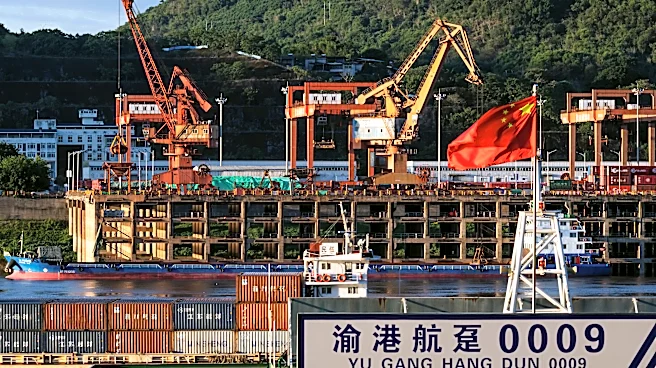
robust export performance and a strong manufacturing sector within China. This sustained surplus highlights China's continued role as a major global exporter, contributing significantly to its economic growth and international trade balance. The figures underscore the country's capacity to produce and export goods on a massive scale, maintaining a positive trade balance despite global economic fluctuations.
Why It's Important?
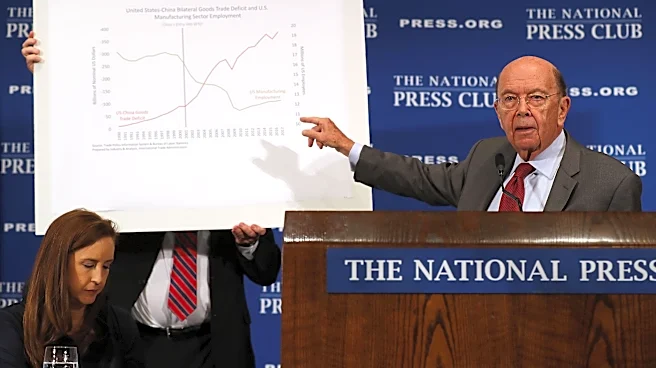
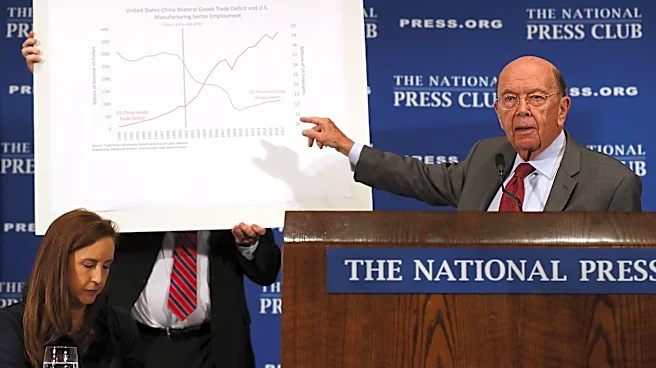
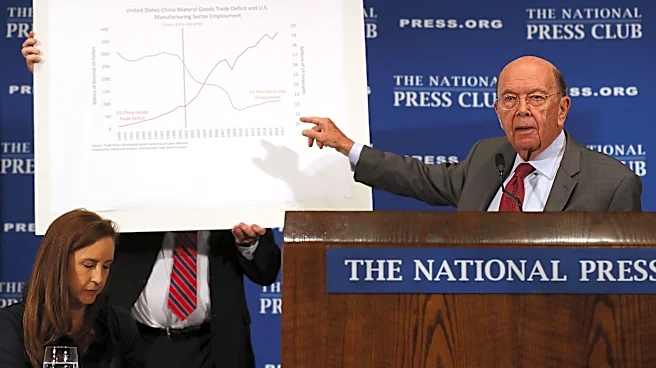
China's sustained trade surplus of over $1 trillion has significant implications for global trade dynamics and economic relations, particularly with the United States. A large trade surplus often indicates a country's competitive advantage in manufacturing and export, which can lead to trade imbalances with other nations. For the U.S., this continued surplus could exacerbate existing trade tensions and discussions around fair trade practices and market access. It also suggests that global supply chains remain heavily reliant on Chinese production. Economically, a strong export sector in China can influence global prices and demand for raw materials, while also impacting the competitiveness of industries in other countries. The surge in October exports further demonstrates China's economic resilience and its ability to meet international demand.
What's Next?
The ongoing large trade surplus from China is likely to keep trade policy discussions at the forefront for many countries, including the U.S. Policymakers may continue to scrutinize trade practices and potentially explore measures to address perceived imbalances. Businesses globally will need to adapt to China's strong export capabilities, either by seeking competitive advantages or by diversifying their supply chains. The sustained economic performance indicated by these figures will also be a key factor in global economic forecasts and investment decisions. Future trade negotiations and international economic forums will likely feature discussions on how to manage these significant trade flows and their broader economic impacts.
Beyond the Headlines
Beyond the immediate economic figures, China's consistent trade surplus reflects deeper structural aspects of its economy, including its industrial capacity, labor costs, and technological advancements in manufacturing. This sustained performance could also be linked to global consumption patterns and the demand for affordable goods. The ethical and environmental implications of such large-scale production are also a consideration, as increased manufacturing often comes with resource consumption and emissions. Furthermore, the geopolitical dimension of trade surpluses cannot be overlooked, as economic power often translates into political influence, shaping international relations and global governance structures.