




What's Happening?
Blue Origin, the space systems company founded by Jeff Bezos, is actively seeking a Principal IC – Program/Project Management to lead its enterprise manufacturing strategy and project management for aerospace operations. This role is critical for scaling
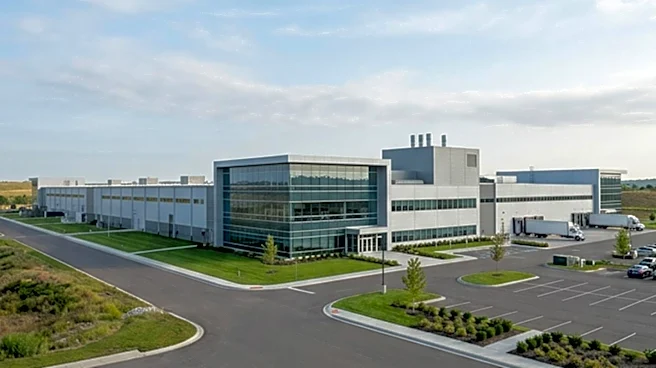
high-rate precision manufacturing across multiple programs within the company. The selected individual will be responsible for analyzing current manufacturing flows, identifying root cause challenges, and optimizing future capacity. They will also develop contingency plans, drive continuous improvement using methodologies like Lean and Six Sigma, and communicate strategic recommendations to executive leadership. The position requires deep expertise in manufacturing concepts and the ability to pioneer new processes for both people and products, balancing technical knowledge with interpersonal skills to foster a culture of scaled success. This strategic hire underscores Blue Origin's commitment to expanding its production capabilities for reusable launch vehicles, rocket engines, lunar landers, and satellite systems.
Why It's Important?
This hiring initiative by Blue Origin is significant as it directly supports the company's long-term vision of enabling millions of people to live and work in space for Earth's benefit. By scaling its manufacturing operations, Blue Origin aims to increase the production of its space vehicles and systems, which are essential for achieving its ambitious goals. The focus on high-rate precision manufacturing indicates a move towards more efficient and cost-effective production, which could lower the barriers to space access for civil, commercial, and defense customers. This expansion in manufacturing capability could also create numerous job opportunities in the aerospace sector, particularly in locations like Huntsville, Alabama, where the role is based. Furthermore, successful scaling of production could accelerate the development and deployment of Blue Origin's various space projects, potentially impacting the broader U.S. space industry by fostering innovation and competition.
What's Next?
The immediate next step for Blue Origin is to fill this critical Principal IC – Program/Project Management position. Once onboard, the individual will be tasked with implementing advanced manufacturing strategies and driving operational efficiencies across Blue Origin's facilities. This will involve a comprehensive analysis of existing production processes, the integration of Lean and Six Sigma methodologies, and the development of new, groundbreaking processes. Success in this role will likely lead to a significant increase in Blue Origin's production output, potentially accelerating the launch schedules for its New Glenn rocket and other space systems. The company's ability to scale its manufacturing will be a key factor in its competitive standing within the rapidly evolving space industry, influencing its capacity to meet future demands from both government and commercial clients. This strategic focus on manufacturing excellence suggests a period of significant growth and operational refinement for Blue Origin.
Beyond the Headlines
Beyond the immediate operational benefits, Blue Origin's emphasis on scaling manufacturing reflects a broader trend in the commercial space industry towards industrialization. As space exploration and utilization become more accessible, the ability to produce reliable and cost-effective hardware at scale is paramount. This move by Blue Origin could set new benchmarks for efficiency and production volume in aerospace manufacturing, potentially influencing other players in the sector to adopt similar strategies. Ethically, the vision of 'millions of people living and working in space' raises questions about resource allocation, environmental impact beyond Earth, and the long-term sustainability of space colonization. Legally, increased space activity will necessitate evolving regulatory frameworks for manufacturing, launches, and orbital operations. Culturally, successful large-scale space industrialization could shift societal perceptions of space from a frontier of exploration to a domain of human habitation and economic activity, fundamentally altering humanity's relationship with the cosmos.