



What's Happening?
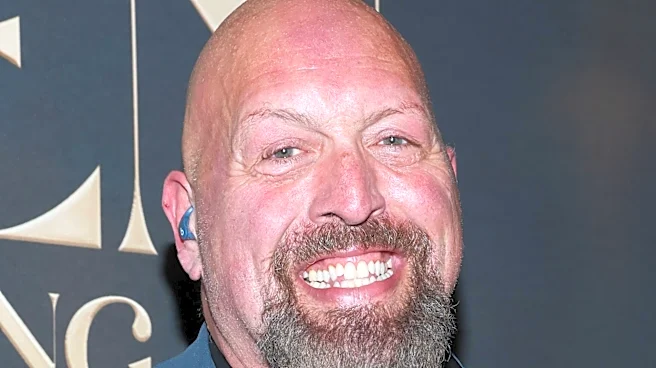
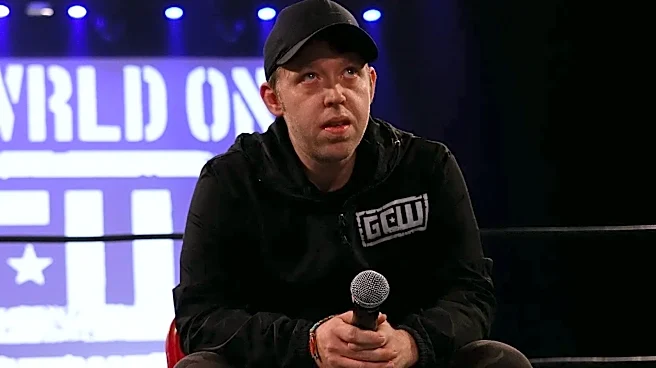
Paul Wight, known as The Big Show in WWE, has candidly admitted that he would have fired himself from All Elite Wrestling (AEW) three years ago due to a series of significant physical setbacks. Speaking on 'Inside the Ring,' Wight detailed his struggles
with multiple knee and hip replacements over the past six years, which have severely limited his in-ring activity. He contrasted this with his final years in WWE, where he realized his in-ring career was ending when Vince McMahon began referring to him by his real name, 'Paul,' signaling a shift towards ambassadorial roles. Despite his extensive physical challenges and limited wrestling appearances in AEW, Wight expressed gratitude that Tony Khan, AEW's owner, continues to see value in him, not only for potential in-ring returns but also for mentoring younger talent and contributing in other capacities.
Why It's Important?
Paul Wight's admission highlights the immense physical toll professional wrestling takes on its performers and the challenges of maintaining a career through severe injuries. His story underscores the dedication required to stay in the industry, even when the body is breaking down. For AEW, Khan's continued support for Wight, despite his physical limitations, demonstrates a commitment to valuing veteran experience and mentorship, which can be crucial for developing younger talent. This approach contrasts with a purely performance-driven model, suggesting a more holistic view of a wrestler's contribution to a promotion. It also provides insight into the personal struggles wrestlers face when their physical capabilities decline, and the emotional impact of transitioning from an active competitor to a different role.
What's Next?
Wight's comments suggest he remains committed to getting healthy enough to wrestle again, despite the numerous surgeries. His recent display of a leaner physique indicates ongoing efforts towards this goal. While a championship run or a perfectly scripted retirement match may not be his immediate aim, his desire to simply 'get back in the ring' remains. AEW will likely continue to utilize Wight in various capacities, leveraging his vast experience for commentary, coaching, or occasional non-wrestling appearances, while keeping the door open for a potential in-ring return if his health permits. His situation will continue to be a testament to the resilience of professional wrestlers and the evolving roles veterans play in the industry.
Beyond the Headlines
Wight's reflection on his career trajectory, particularly the shift in how Vince McMahon addressed him, offers a poignant look at the psychological impact of aging and physical decline in a performance-based industry. The transition from being seen as a 'talent' to being considered for 'ambassador roles' can be a difficult emotional journey for athletes whose identities are deeply intertwined with their physical prowess. Khan's continued belief in Wight, despite his physical state, speaks to the value of human capital and loyalty in business, especially in an industry often characterized by its cutthroat nature. It also raises broader questions about how industries support long-serving employees through physical decline and how individuals adapt their professional identities when their primary skills are no longer viable.