






What's Happening?
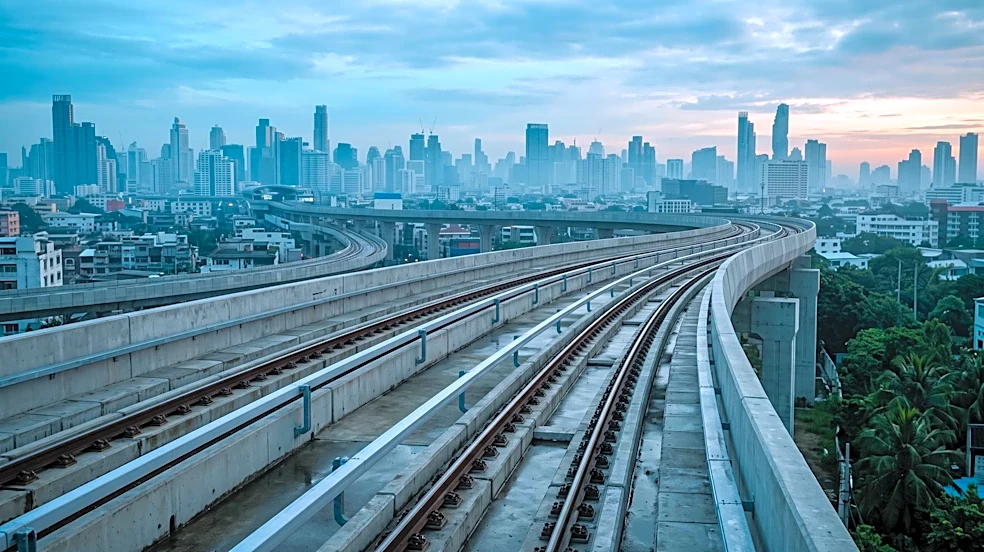
The Mass Rapid Transit Authority of Thailand (MRTA) is advancing plans for four new rail projects in Bangkok, totaling an estimated 175 billion baht. These projects aim to significantly expand the city's transit network, covering an additional 64.8 kilometers.
Two key lines, the Brown Line and the Silver Line, are slated for submission to the Cabinet for approval in 2028. The Brown Line, a 22.1-kilometer monorail with 20 stations connecting Khae Rai and Lam Sali, has seen its Cabinet submission delayed to 2028 due to ongoing negotiations with the Expressway Authority of Thailand (EXAT) regarding shared land use. The Silver Line, a 19.7-kilometer light rail system with 14 stations, is designed to link Bang Na with Suvarnabhumi Airport. Additionally, the MRTA is reviewing the Grey Line, transferred from the Bangkok Metropolitan Administration (BMA), and has plans for a Light Blue Line, though these are prioritized after the Silver and Grey projects. The MRTA is coordinating with various agencies, including Airports of Thailand Public Company Limited (AOT), to ensure seamless integration and connectivity for these new lines.
Why It's Important?
This extensive rail expansion is crucial for addressing Bangkok's growing transportation demands and alleviating traffic congestion, which has long been a significant challenge for the city. By adding new lines and extending existing networks, the MRTA aims to improve connectivity between Bangkok and its surrounding areas, making public transit more accessible and efficient for millions of residents and visitors. The development of these projects will also stimulate economic activity through job creation in construction and related industries. Improved public transportation infrastructure can enhance urban mobility, reduce commuting times, and potentially lower carbon emissions from private vehicles. Furthermore, the integration of the Silver Line with Suvarnabhumi Airport will significantly benefit tourism and business travel, strengthening Bangkok's position as a regional hub. The successful implementation of these projects will demonstrate Thailand's commitment to modernizing its urban infrastructure and supporting sustainable urban development.
What's Next?
The immediate next steps involve continued detailed studies and negotiations for the proposed rail lines. The MRTA expects to submit the Brown Line and Silver Line proposals to the Cabinet for approval in 2028. This will require finalizing agreements with entities like EXAT for shared rights-of-way and with AOT for airport connections. Following Cabinet approval, the projects will proceed to the tendering and construction phases, which will likely span several years. Stakeholders, including government agencies, construction companies, and local communities, will be closely involved in the subsequent stages. The MRTA will also continue to review and plan for the Grey Line and Light Blue Line, adjusting their timelines based on the progress of the priority projects and overall urban development needs. Public consultations and environmental impact assessments will also be critical components of the process to ensure community acceptance and environmental sustainability.
Beyond the Headlines
The planned expansion goes beyond merely adding new train lines; it represents a strategic effort to reshape Bangkok's urban landscape and enhance its long-term liveability and economic competitiveness. The focus on integrating different modes of transport and connecting key areas like the airport underscores a vision for a more cohesive and efficient metropolitan area. However, such large-scale infrastructure projects often come with challenges, including potential disruptions during construction, land acquisition issues, and the need for substantial financial investment. The success of these projects will depend on effective project management, transparent governance, and the ability to mitigate environmental and social impacts. Moreover, the expansion could lead to significant urban development along the new corridors, potentially driving up property values and creating new commercial and residential hubs, thereby altering the city's socio-economic fabric over the coming decades.