





What's Happening?
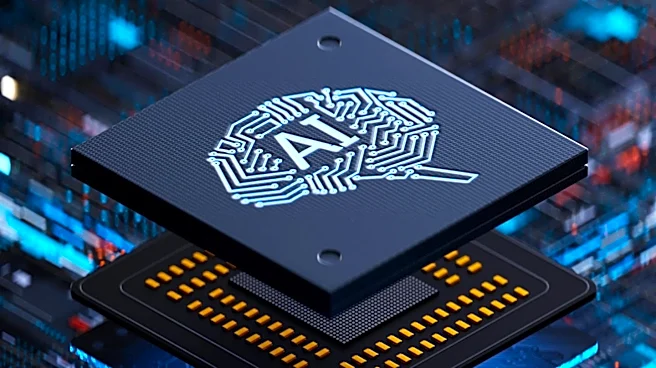
Jon Gray, President and Chief Operating Officer of Blackstone, stated on November 3, 2026, at the Global Financial Leaders' Investment Summit in Hong Kong, that significant global equity fundraising will be necessary to sustain the rapid growth of the AI
industry. Gray highlighted that the demand for computing power is outstripping supply, leading to an urgent need for capital. He specifically mentioned that companies like Meta, Google, and Oracle are expected to pursue equity raises to fund their AI operations. Additionally, Gray identified SpaceX and Anthropic as potential candidates for initial public offerings (IPOs), which could further compete for investor capital. He noted that combined capital expenditures by five hyperscalers are projected to reach $820 billion by 2026, representing approximately 2.5% of the U.S. gross domestic product. Blackstone, under Gray's leadership, has been actively investing in AI infrastructure, including data centers and power assets, to address the existing capacity shortages.
Why It's Important?
The anticipated equity raises by major U.S. tech companies like Meta, Google, and Oracle, alongside potential IPOs from SpaceX and Anthropic, signal a significant shift in capital allocation within the U.S. financial markets. This influx of fundraising is crucial for the continued development and expansion of AI infrastructure, which is vital for maintaining the U.S.'s competitive edge in the global technology landscape. The substantial capital expenditures, projected to reach $820 billion by 2026, underscore the immense financial commitment required for AI growth. This demand creates opportunities for investors in the equity markets but also poses challenges by potentially drawing from the same pool of capital, affecting market dynamics. The focus on data centers and power assets highlights the foundational infrastructure necessary for AI, impacting sectors beyond just software development and creating investment opportunities in real estate, energy, and hardware.
What's Next?
In the near future, U.S. financial markets are likely to see increased activity from major tech companies seeking equity financing to fuel their AI initiatives. This could involve new stock offerings or other forms of capital raising. The potential IPOs of SpaceX and Anthropic, while not yet confirmed, would introduce new high-profile investment opportunities and could intensify competition for investor capital. Industry stakeholders, including venture capitalists, institutional investors, and individual shareholders, will be closely monitoring these developments. The ongoing demand for computing power and the associated infrastructure buildout will continue to drive investment in data centers, energy solutions, and advanced chip manufacturing. Regulatory bodies may also begin to examine the concentration risks for debt investors as the scale of AI financing grows, potentially leading to new guidelines or oversight.
Beyond the Headlines
The massive capital requirements for AI development, as highlighted by Jon Gray, point to a broader economic and technological transformation. The projected $820 billion in capital expenditures by 2026, representing a significant portion of U.S. GDP, indicates that AI is not just a technological trend but a fundamental economic driver. This scale of investment raises questions about long-term economic sustainability and potential market bubbles if returns do not materialize as expected. Furthermore, the emphasis on data centers and energy needs brings to light the environmental impact of AI, particularly its substantial energy consumption. This could lead to increased pressure for sustainable energy solutions and green data center technologies. The competition for capital among established tech giants and emerging AI players like Anthropic also reflects the dynamic and rapidly evolving nature of the AI ecosystem, where innovation and financial backing are critical for survival and growth.