





What's Happening?
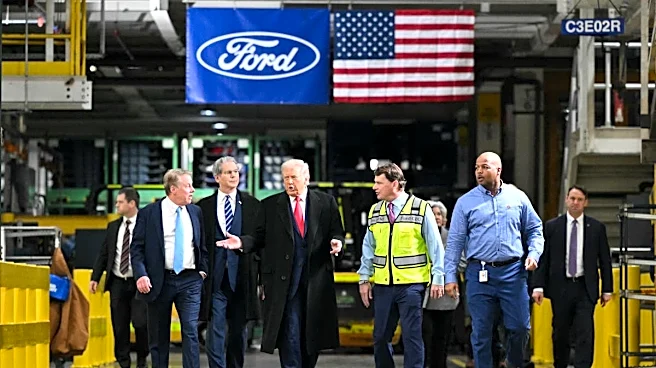
Ford has decided to rehire 350 veteran engineers after its reliance on artificial intelligence and automated quality systems failed to meet the company's standards. These engineers, including former Ford employees and specialists from suppliers, are tasked
with identifying potential issues before parts reach the production line. Kumar Galhotra, a Ford executive, noted that the company had been increasingly dependent on automated systems but found it necessary to bring back technical specialists to address failure points early in the production process. Charles Poon, another executive, acknowledged the mistaken belief that AI alone could ensure high-quality products. The rehired engineers are not replacing AI but are instead working to train younger staff and enhance the company's AI tools.
Why It's Important?
This development highlights the limitations of relying solely on AI for quality assurance in manufacturing. Ford's decision to rehire experienced engineers underscores the importance of human oversight in complex production processes. The move is significant as it has led to reduced warranty and recall costs, with CEO Jim Farley noting substantial savings. This situation reflects a broader industry trend where companies are balancing AI integration with human expertise to maintain quality standards. The decision could influence other manufacturers to reassess their reliance on AI and consider the value of experienced human input in critical operations.
What's Next?
Ford's strategy of integrating human expertise with AI tools is likely to continue as the company seeks to optimize its production processes. The rehired engineers will play a crucial role in training younger staff and refining AI systems, potentially leading to further improvements in quality and cost savings. Other automotive manufacturers may observe Ford's approach and consider similar strategies to enhance their production quality. The industry might see a shift towards a more balanced approach, combining AI capabilities with human oversight to achieve optimal results.