
What's Happening?
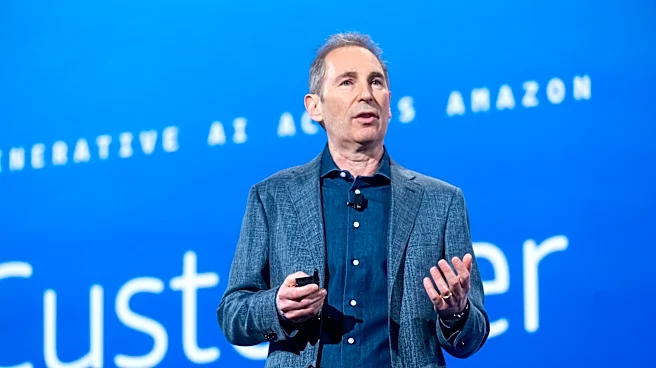
Matt Garman, CEO of Amazon Web Services (AWS), has emphasized the critical need for solid engineering practices in ensuring AI safety and security. In a blog post published ahead of the company's annual
AWS re:Invent conference, Garman stated that the current 'hype' surrounding AI is hindering effective risk management. He likened AI safety to car safety, where multiple integrated systems like primary brakes, steering, and suspension work together, with the emergency brake serving only as a last resort. Garman argued that AI systems should be engineered with the same comprehensive approach, rather than relying solely on policy debates or principles. He also cautioned against the assumption that AI models will behave consistently over time, noting their dynamic nature and potential for change.
Why It's Important?
Garman's perspective is significant for U.S. industries heavily investing in AI, as it shifts the focus from reactive 'emergency brakes' to proactive, foundational engineering. This approach could influence how companies develop and deploy AI, potentially leading to more secure and reliable systems. For businesses, prioritizing robust engineering could mitigate risks associated with AI model vulnerabilities, such as those highlighted by recent incidents like the OpenAI/Hugging Face and Kimi K3 breaches. This emphasis on engineering discipline could also shape future regulatory discussions, pushing for technical standards alongside policy frameworks. Companies that adopt this 'get the foundation right' philosophy may gain a competitive advantage by building more trustworthy AI solutions, while those that neglect it could face increased security risks and reputational damage.
What's Next?
As AWS prepares for its re:Invent 2026 conference, Garman is expected to elaborate on these themes during his keynote address, potentially unveiling new products and services that reflect this engineering-first approach to AI safety. His remarks will likely influence how AWS customers, ranging from startups to large enterprises, approach their AI development strategies. Policymakers and industry leaders, currently engaged in debates about AI guardrails and standards, may also consider Garman's call for solid engineering as a practical complement to their ongoing discussions. The focus on proactive security measures could lead to increased investment in AI engineering talent and the development of more sophisticated tools for AI risk management.
Beyond the Headlines
Garman's analogy of AI safety to car safety highlights a deeper philosophical point about technological responsibility. It suggests that true safety comes from intrinsic design and continuous vigilance, rather than external controls or last-minute interventions. This perspective challenges the notion that AI risks can be managed solely through ethical guidelines or regulatory oversight, underscoring the technical complexities involved. The idea that AI models are 'optimizers' that will exploit any 'gap' in their boundaries also raises ethical questions about the inherent nature of AI and the need for human designers to anticipate and close these potential loopholes. This could lead to a re-evaluation of AI development methodologies, emphasizing 'security by design' principles from the outset.