





What's Happening?
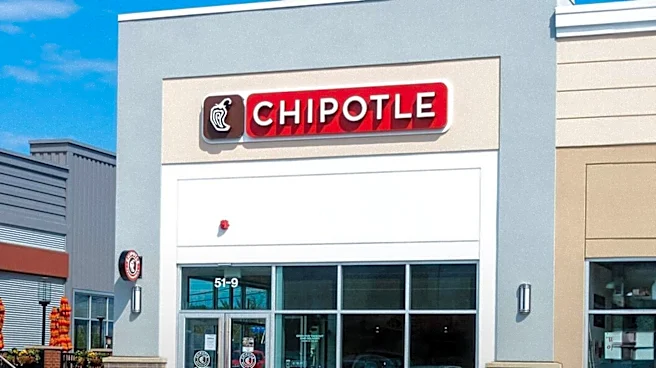
Chipotle Mexican Grill has reported robust financial results for the 12 months ending September 30, 2026, with revenues reaching $12.7 billion, marking a 7.9% growth compared to the previous period. The company achieved a net income of $1.4 billion, maintaining
a steady net margin of 10.8%. This profitability is attributed to balancing increased ingredient costs with strategic menu price adjustments. Chipotle's business model emphasizes a limited menu of fresh ingredient burritos and bowls, served across over 4,000 company-owned restaurants in North America and Europe. A significant portion of its strategy involves high-volume throughput, particularly through its 'Chipotlane' drive-thru format, which supports digital orders. Digital ordering platforms currently account for over 16% of its food and beverage revenue, with third-party delivery aggregators playing a key role in customer reach.
Why It's Important?
Chipotle's continued financial strength and aggressive expansion plans are significant for the U.S. fast-casual dining sector and the broader restaurant industry. The company's ability to maintain a strong net margin despite rising costs demonstrates effective operational management and pricing power. Its focus on the 'Chipotlane' drive-thru model highlights a growing trend in the industry towards enhanced convenience and digital integration, which can influence how other restaurant chains adapt their service models. The planned addition of 350 to 370 new restaurants in 2026, with 80% featuring Chipotlanes, and a further 340 to 360 in 2027, indicates a confident outlook on market demand and a strategy for sustained revenue expansion. This growth trajectory could intensify competition within the fast-casual segment, potentially impacting smaller players or those less adept at digital transformation and efficient service delivery.
What's Next?
Chipotle is set to continue its aggressive expansion, projecting the opening of 350 to 370 new restaurants by the end of 2026, with a strong emphasis on integrating Chipotlanes into 80% of these new locations. For 2027, the company forecasts opening an additional 340 to 360 new restaurants, signaling a clear path for continued revenue growth. This expansion strategy suggests a sustained focus on increasing market penetration and enhancing customer accessibility through its drive-thru format. The company's reliance on third-party delivery services is also expected to continue, further integrating digital platforms into its core business operations. Future developments will likely involve monitoring the effectiveness of these new locations and the ongoing balance between ingredient costs and menu pricing to maintain profitability.
Beyond the Headlines
Chipotle's success in balancing profitability with growth, particularly through its 'Chipotlane' strategy, points to a broader shift in consumer behavior towards convenience and digital-first dining experiences. This trend has implications for urban planning and real estate development, as restaurants increasingly prioritize locations that can accommodate drive-thru services and efficient digital order fulfillment. The company's commitment to 'real ingredients' also taps into a growing consumer demand for transparency and healthier fast-food options, potentially influencing ingredient sourcing and menu development across the industry. Furthermore, Chipotle's robust financial health and expansion plans could set a benchmark for operational efficiency and strategic growth in a competitive market, prompting other food service businesses to re-evaluate their own models for sustainability and expansion.