





What's Happening?
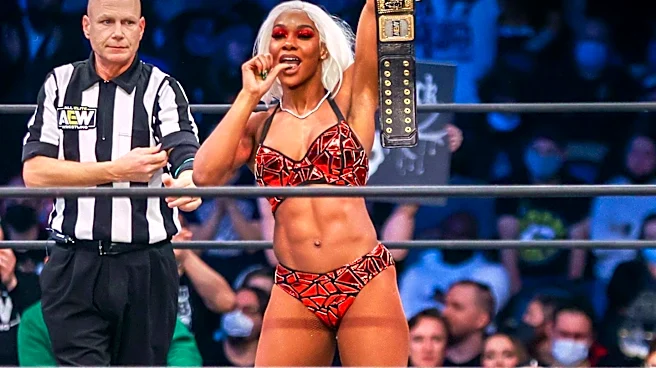
Skydance, the media company, is reportedly evaluating its future television deal with All Elite Wrestling (AEW). While AEW's current lucrative TV contract is guaranteed through the end of 2027, Skydance holds an option to extend the deal for an additional
year. According to reporter Blake Avignon, a former Warner Bros. Discovery (WBD) executive suggests that Skydance may not pick up this option if AEW continues to offer only wrestling programming. The concern from Skydance is that AEW has not diversified its content offerings. AEW has historically marketed itself with the slogan 'Where The Best Wrestle,' emphasizing its core product. This potential decision by Skydance will be a significant development in the professional wrestling industry in 2027.
Why It's Important?
This situation is critical for AEW as its television contract is a major source of revenue and exposure. A failure to secure an extension with Skydance could significantly impact AEW's financial stability and its ability to compete with other major wrestling promotions like WWE. The demand for diversified content from Skydance indicates a broader trend in media, where platforms are seeking a wider range of programming to attract and retain audiences. If AEW is forced to broaden its content beyond its wrestling-centric model, it could lead to a fundamental shift in its identity and operational strategy. This could also influence how other sports and entertainment properties approach their content deals with major media partners, highlighting the increasing pressure for varied programming.
What's Next?
The decision by Skydance regarding AEW's TV deal extension is anticipated to be one of the most significant stories in professional wrestling in 2027. AEW's leadership, particularly Tony Khan, will likely need to address Skydance's concerns about content diversification. This could involve exploring new types of programming, documentaries, or other non-wrestling related content to satisfy Skydance's requirements. If AEW fails to diversify, it might face the challenge of finding a new broadcast partner, which could lead to a reduction in broadcast reach or revenue. The outcome will shape AEW's strategic direction and its competitive standing in the wrestling landscape for years to come.
Beyond the Headlines
The potential non-renewal of AEW's contract due to a lack of content diversification highlights a crucial shift in the media landscape. Traditional single-genre content providers are increasingly under pressure to expand their offerings to remain attractive to major broadcasters and streaming platforms. This trend reflects a move towards 'super-platforms' that aim to be a one-stop shop for various forms of entertainment. For AEW, this could mean a re-evaluation of its brand identity and a strategic pivot towards becoming a broader entertainment company rather than solely a wrestling promotion. This situation could also set a precedent for how media companies evaluate their partnerships, emphasizing the importance of adaptability and innovation in content strategy.