






What's Happening?
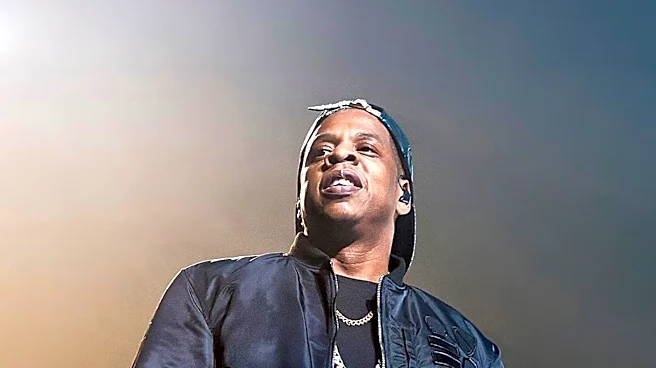
Jay-Z, who serves as the Super Bowl halftime show producer, has reportedly chosen himself to headline the upcoming event. Steven Horowitz, a senior music writer at Variety, discussed this development on 'The Daily Report.' This decision would mark a significant
moment, with the producer of the highly anticipated musical spectacle also taking center stage as the main performer. The Super Bowl halftime show is one of the most-watched musical events globally, attracting hundreds of millions of viewers.
Why It's Important?
If confirmed, Jay-Z headlining the Super Bowl halftime show would be a monumental event, given his dual role as producer and performer. This move would grant him unprecedented creative control over the entire production, potentially leading to a highly personalized and impactful performance. It also highlights the increasing influence of artists in shaping major cultural events. For the NFL, having a figure of Jay-Z's stature and production expertise as both a behind-the-scenes force and a performer could elevate the show's artistic quality and cultural resonance, attracting a massive and diverse audience. This decision could also set a new precedent for how future halftime shows are conceptualized and executed.
What's Next?
Following this report, official announcements from the NFL and Roc Nation (Jay-Z's entertainment company) are anticipated to confirm or deny the headlining act. If confirmed, the focus will shift to the creative direction and potential guest performers for the show. Speculation will likely build around the setlist, stage design, and any political or social messages Jay-Z might incorporate into his performance. The selection process for future halftime shows could also be influenced by this decision, potentially encouraging more artist-producers to take on similar dual roles.
Beyond the Headlines
Jay-Z's potential decision to headline the Super Bowl halftime show while also producing it carries significant cultural and business implications. It represents a powerful assertion of artistic and entrepreneurial control, allowing him to fully realize his vision for one of the world's biggest stages. This move could also be seen as a statement on representation and ownership within the entertainment industry. Furthermore, it underscores the evolving relationship between the NFL and its halftime show producers, moving towards a model where artists have greater autonomy. The performance itself would be scrutinized not only for its entertainment value but also for its broader cultural impact and any messages it conveys.