




What's Happening?
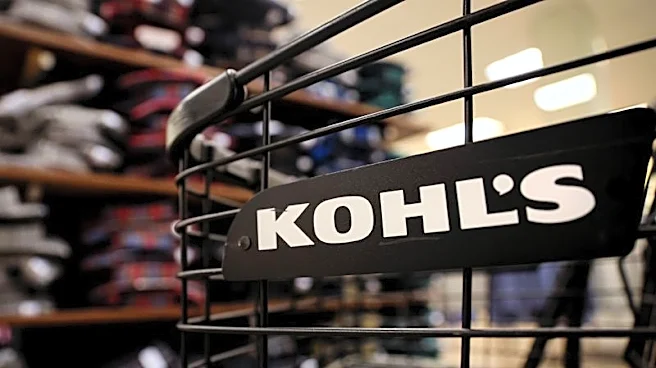
Kohl's Corporation (NYSE:KSS) has raised its profit outlook for the fiscal year, primarily due to approximately $150 million in tariff refunds received during the second quarter. The company's non-GAAP adjusted diluted EPS increased significantly to $1.28
from $0.56 year-over-year. Management indicated that about $0.65 of the updated forecast's midpoint increase is attributable to these refunds, accounting for roughly 81% of the improvement. This financial boost occurred despite a continued decline in net sales and comparable sales, which both fell by 0.9%, extending a streak of negative comparable sales to 18 consecutive quarters. The refunds also contributed to a 305 basis point expansion in gross margin, with 300 basis points directly from the tariff benefit.
Why It's Important?
This situation highlights how significant tariff refunds can temporarily mask underlying operational challenges for major U.S. retailers like Kohl's. While the refunds provided a substantial boost to profitability and gross margins, the persistent decline in comparable sales indicates that the core business is still struggling to attract customers. For investors, this raises questions about the sustainability of Kohl's financial performance once these one-time benefits are exhausted. The ability of the company to reinvest these funds into pricing, inventory, marketing, and staffing could be crucial for stimulating future demand and achieving a genuine turnaround, rather than relying on external financial windfalls.
What's Next?
Kohl's has raised its non-GAAP adjusted diluted EPS forecast to $1.80-$2.40, with the midpoint largely influenced by the tariff refunds. The company plans to use these funds to support various initiatives aimed at improving future demand, such as lower prices and enhanced customer experience. However, the challenge remains to translate these investments into positive comparable sales growth. Future earnings reports will be critical in assessing whether these strategic reinvestments can reverse the long-standing trend of declining sales and establish a more sustainable path to profitability. The market will be watching for evidence that the company's turnaround efforts are gaining traction independently of tariff-related benefits.
Beyond the Headlines
The case of Kohl's underscores a broader issue within the U.S. retail sector: the struggle of traditional department stores to adapt to changing consumer behaviors and intense competition. The reliance on tariff refunds to boost profitability, while beneficial in the short term, highlights the vulnerability of businesses that have not yet found a sustainable growth model. This situation also brings into focus the impact of government trade policies on corporate financial health, demonstrating how external factors can significantly influence a company's reported performance. Ultimately, for Kohl's and similar retailers, the long-term success will depend on fundamental business transformation, including innovation in product offerings, digital engagement, and in-store experience, rather than one-off financial gains.