








What's Happening?
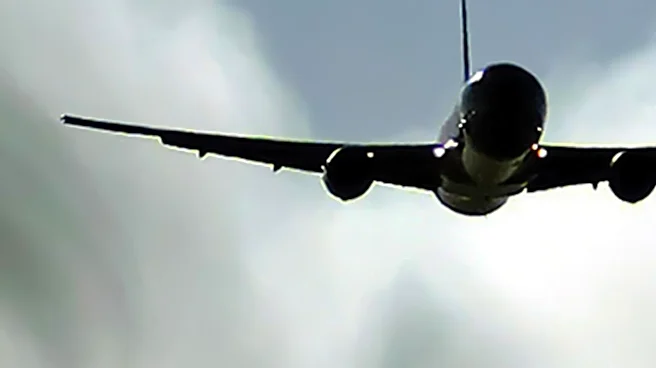
A pregame stunt involving two Embraer passenger jets flying at an exceptionally low altitude over a packed sports stadium in Cape Town, South Africa, has ignited a significant safety debate. The flyby occurred on Saturday before a rugby match between
South Africa and New Zealand, with an estimated crowd of 56,000 people present. Flight tracking service Flightradar24 reported that the lead jet passed just 41 to 46 feet (12 to 14 meters) above the stadium's roof. The second jet flew through a cloud of pink dust released as part of the pregame show. Airlink, the airline operating the jets and a sponsor of the rugby series, stated that the flyby was carefully planned, rehearsed, and conducted according to safety regulations, with three senior captains on board each jet. However, aviation experts have raised concerns about the minimal margin for error at such low altitudes.
Why It's Important?
While this event occurred in South Africa, it holds importance for the global aviation industry and event safety protocols, including those in the U.S. The incident highlights the inherent risks associated with low-altitude aerial displays over densely populated areas. The debate centers on whether the thrill of such stunts outweighs the potential for catastrophic accidents, especially given the minimal margin for error cited by experts. For U.S. event organizers and aviation authorities, this incident serves as a case study in evaluating the balance between entertainment and public safety. It could lead to a review of existing regulations or the implementation of stricter guidelines for similar aerial demonstrations at sporting events or public gatherings within the U.S., ensuring that safety remains the paramount concern. The global attention drawn to this event underscores the need for consistent and rigorous safety standards across international aviation practices.
What's Next?
Airlink has provided flight data from the aircraft's black boxes to the South African Civil Aviation Authority (SACAA) for review. The SACAA is expected to issue a statement regarding its findings, which could include an assessment of whether all safety protocols were indeed followed and if any regulations were breached. This review will be crucial in determining the official stance on the safety of the flyby. Internationally, aviation bodies and event organizers may take note of the SACAA's conclusions and potentially re-evaluate their own guidelines for aerial displays. There could be calls for a more standardized international approach to such stunts, ensuring that similar incidents do not pose undue risks to spectators. The outcome of the investigation could influence future decisions on whether such low-altitude flybys are permitted at major public events, both in South Africa and potentially in other countries, including the U.S.
Beyond the Headlines
The dramatic flyby and subsequent safety debate touch upon the broader cultural and psychological aspects of risk-taking in public entertainment. There's a fine line between creating an exhilarating experience for spectators and exposing them to unnecessary danger. This incident prompts a discussion about the public's perception of safety versus the actual risks involved, especially when complex machinery like passenger jets are involved. It also highlights the role of corporate sponsorship in influencing event programming and the potential pressure to create memorable, high-impact spectacles. Ethically, event organizers and airlines face the challenge of balancing commercial interests and audience engagement with their fundamental responsibility for public safety. The long-term implications could include a shift in public tolerance for high-risk stunts, leading to more conservative approaches in event planning and a greater emphasis on virtual or less physically risky forms of entertainment.