






What's Happening?
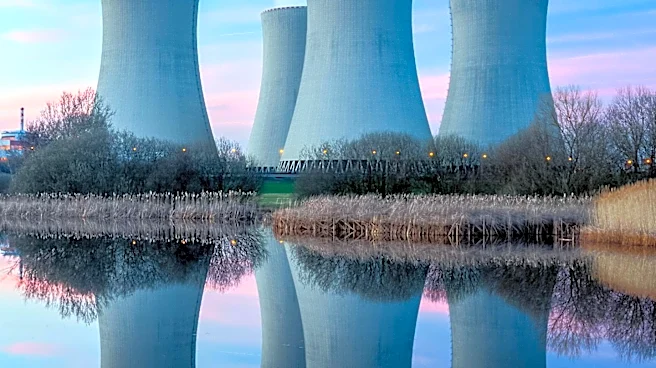
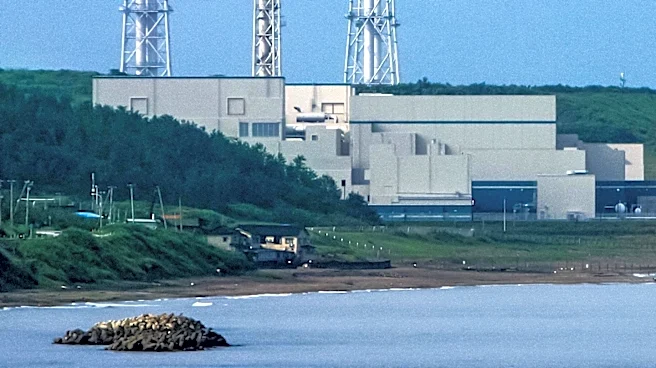
NuScale Power and GE Vernova are two companies vying for a share in the growing small modular reactor (SMR) market. SMRs are smaller than traditional nuclear reactors and can be prefabricated and assembled on-site, reducing construction time and costs.
The International Energy Agency projects that investments in SMRs could rise significantly, reaching a cumulative total of $670 billion by 2050. NuScale's VOYGR SMRs, which generate 77 MWe, have received full design certification from the U.S. Nuclear Regulatory Commission, while GE Vernova's BWRX-300 SMR, generating 300 MWe, is still in the regulatory pipeline. Both companies have different approaches and business models, with NuScale focusing on engineering and design services and GE Vernova leveraging its diversified energy portfolio.
Why It's Important?
The development and deployment of SMRs are crucial for meeting future energy demands, especially in remote areas and for powering data centers. As the world shifts towards cleaner energy sources, SMRs offer a flexible and scalable solution. NuScale's certification gives it a competitive edge, but GE Vernova's diversified business model and existing infrastructure position it as a strong contender. The success of these companies could influence the broader adoption of nuclear energy, impacting energy policy and investment strategies in the U.S. and globally.
What's Next?
NuScale plans to deploy its first reactors in Romania and the U.S. by the early 2030s, while GE Vernova aims to have its first reactor operational in Canada by 2030. Both companies will continue to navigate regulatory processes and seek partnerships to expand their market presence. The outcome of these efforts will likely affect investor confidence and the pace of SMR adoption.