






What's Happening?
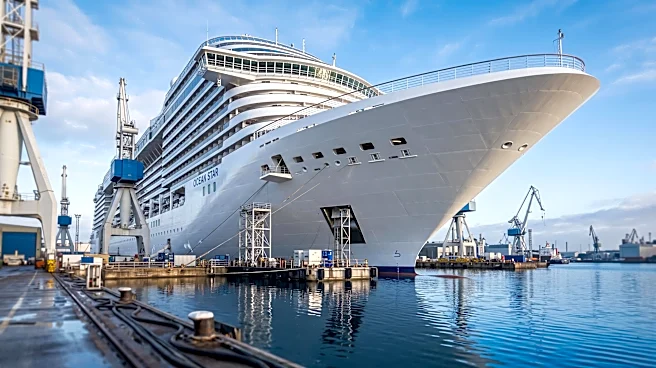
Carnival Cruise Line has placed an order for two new cruise ships with Italian shipbuilder Fincantieri. The contract, valued at over $2.2 billion, will see the ships delivered in 2033 and 2035. Each vessel will measure approximately 130,000 gross tons,
feature around 1,650 guest cabins, and will be powered primarily by liquefied natural gas (LNG). Carnival selected a design that can be adapted for other brands within its fleet, aiming for a reusable platform. Fincantieri, which has built 76 ships for Carnival's brands over the past three decades, was chosen due to its established relationship and expertise. The global cruise fleet is predominantly built in Europe, with about 97% of existing ships and 98% of ships on order originating from European shipyards, according to the Cruise Lines International Association (CLIA). U.S. shipyards primarily focus on Navy, Coast Guard, and domestic vessels, facing challenges in competing for international commercial cruise ship construction due to higher costs and limited economies of scale.
Why It's Important?
This order highlights the continued reliance of major U.S.-based cruise lines like Carnival on European shipbuilders for their fleet expansion. While Carnival's global operations are based in Miami and its vessels utilize major Florida ports such as PortMiami, Port Canaveral, Port Tampa Bay, and JAXPORT, the economic benefits of cruise ship construction largely remain in Europe. This dynamic underscores a significant gap in the U.S. shipbuilding industry's capacity and competitiveness in the commercial cruise sector. The investment in LNG-powered ships also signals a commitment to more environmentally friendly maritime operations, aligning with evolving industry standards and potential future regulations. For Florida, while it remains a crucial hub for cruise operations and economic activity generated by the industry, the lack of domestic cruise ship construction means it misses out on the substantial manufacturing jobs and supply chain benefits associated with building these complex vessels.
What's Next?
The construction of these two new ships will keep Fincantieri's Marghera shipyard busy well into the next decade, with deliveries scheduled for 2033 and 2035. Carnival will continue to operate its global business from Florida, with its new vessels eventually serving U.S. ports. The ongoing trend of European dominance in cruise ship construction is likely to persist, given the specialized industrial ecosystem and supply chains established around European shipyards. Efforts in Florida to expand its maritime workforce, such as federal funding for shipbuilding apprenticeships and state investments in military ship construction infrastructure, are unlikely to immediately translate into a competitive commercial cruise shipbuilding industry. Fincantieri's continued involvement in Florida extends to infrastructure, as its subsidiary is involved in designing and constructing a new berth at PortMiami, indicating a dual role in both building ships abroad and supporting port facilities in the U.S.
Beyond the Headlines
The reliance on European shipyards for cruise ship construction points to deeper economic and industrial policy implications for the United States. The specialized nature of cruise ship building, which involves coordinating thousands of complex components from cabins to advanced propulsion systems, has fostered a unique industrial ecosystem in Europe that is difficult to replicate. This situation reflects a broader challenge for U.S. manufacturing in highly specialized global industries where established foreign competitors hold significant advantages in scale, expertise, and supply chain integration. While the U.S. excels in naval shipbuilding, the commercial cruise sector remains largely out of reach, raising questions about industrial diversification and the long-term economic benefits of supporting domestic manufacturing in all maritime sectors. The continued investment in LNG technology also highlights the industry's response to environmental pressures and the evolving regulatory landscape for shipping emissions.